
Last updated October 15, 2026
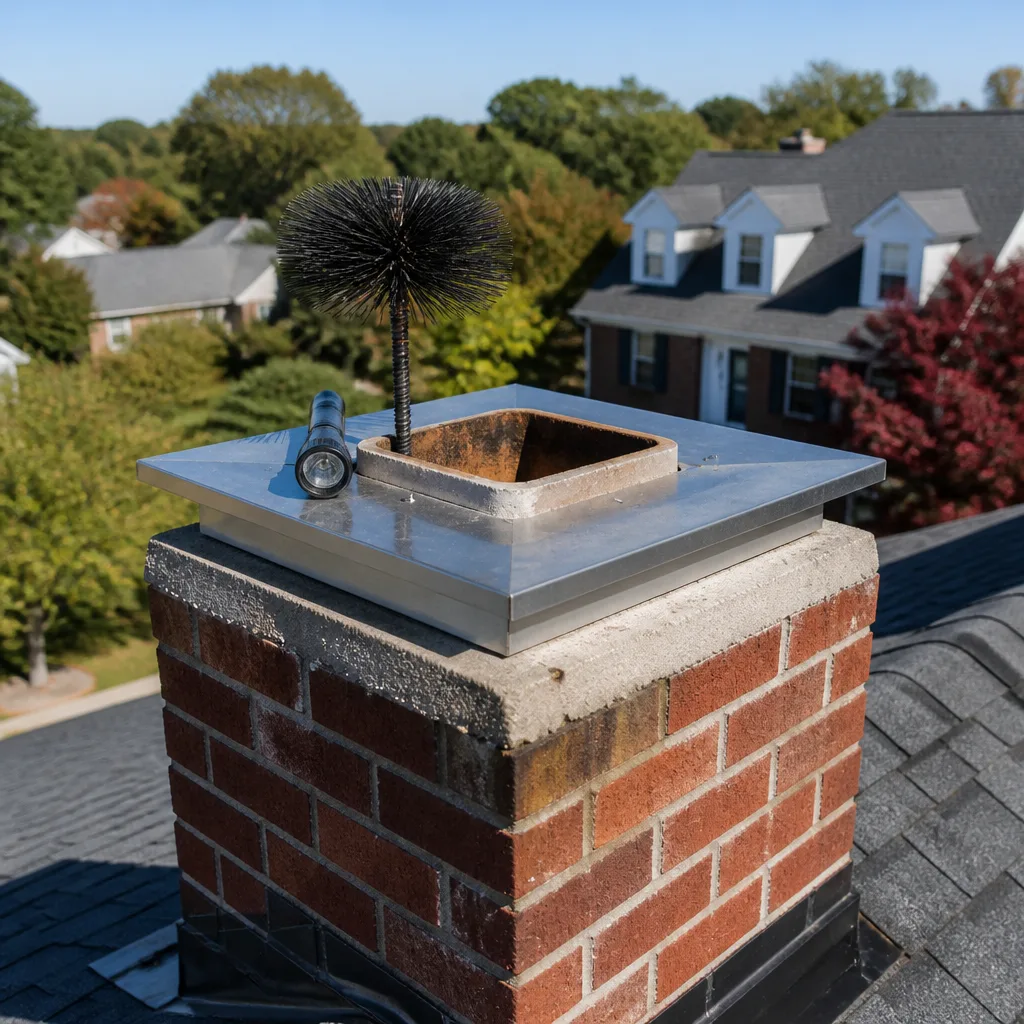 Sweep & inspection
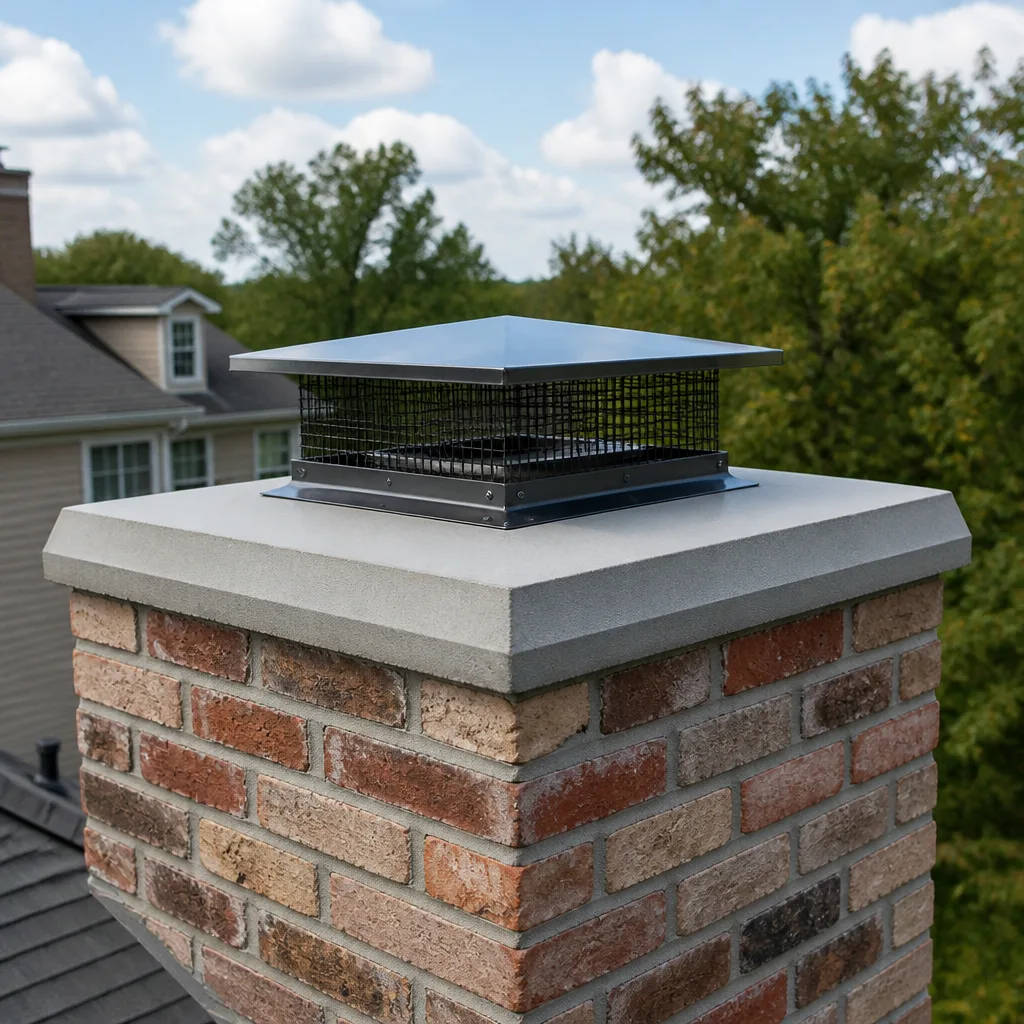 Caps & crowns
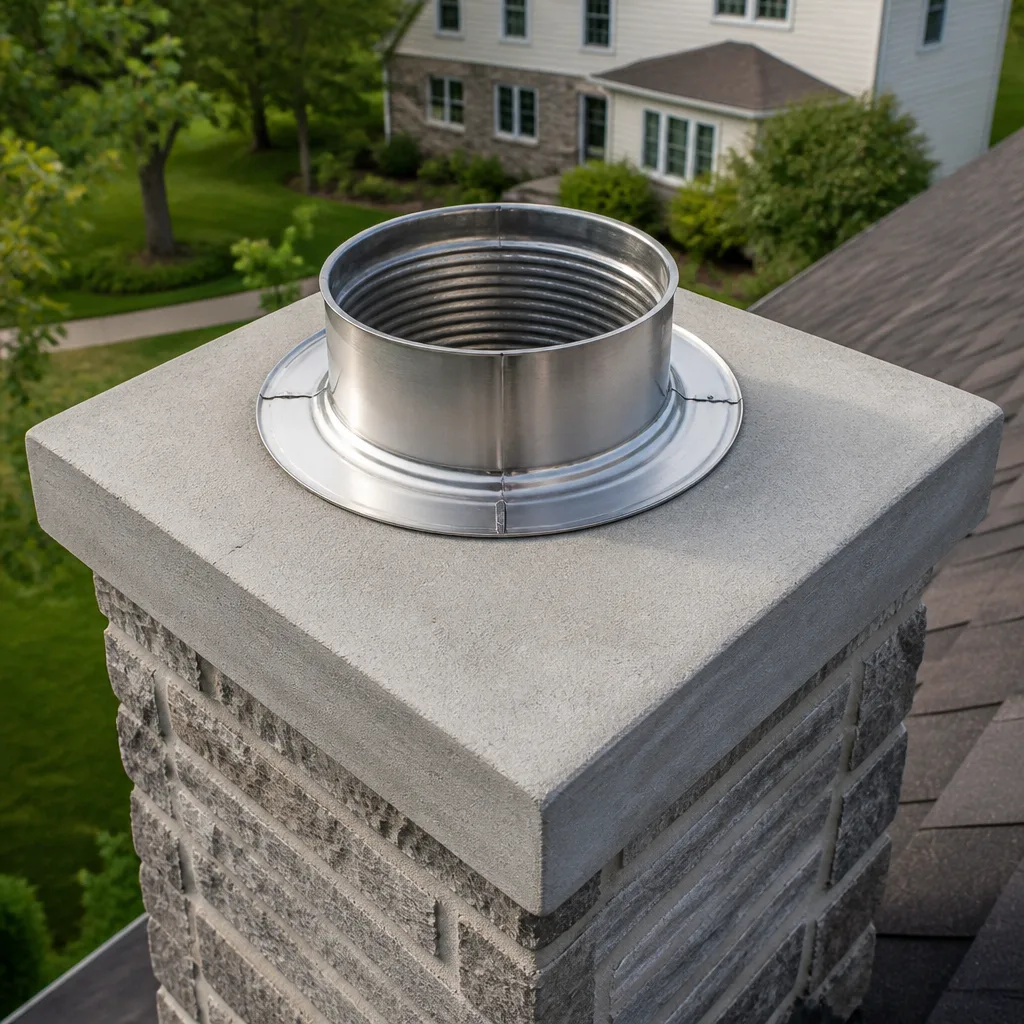 Flue relining
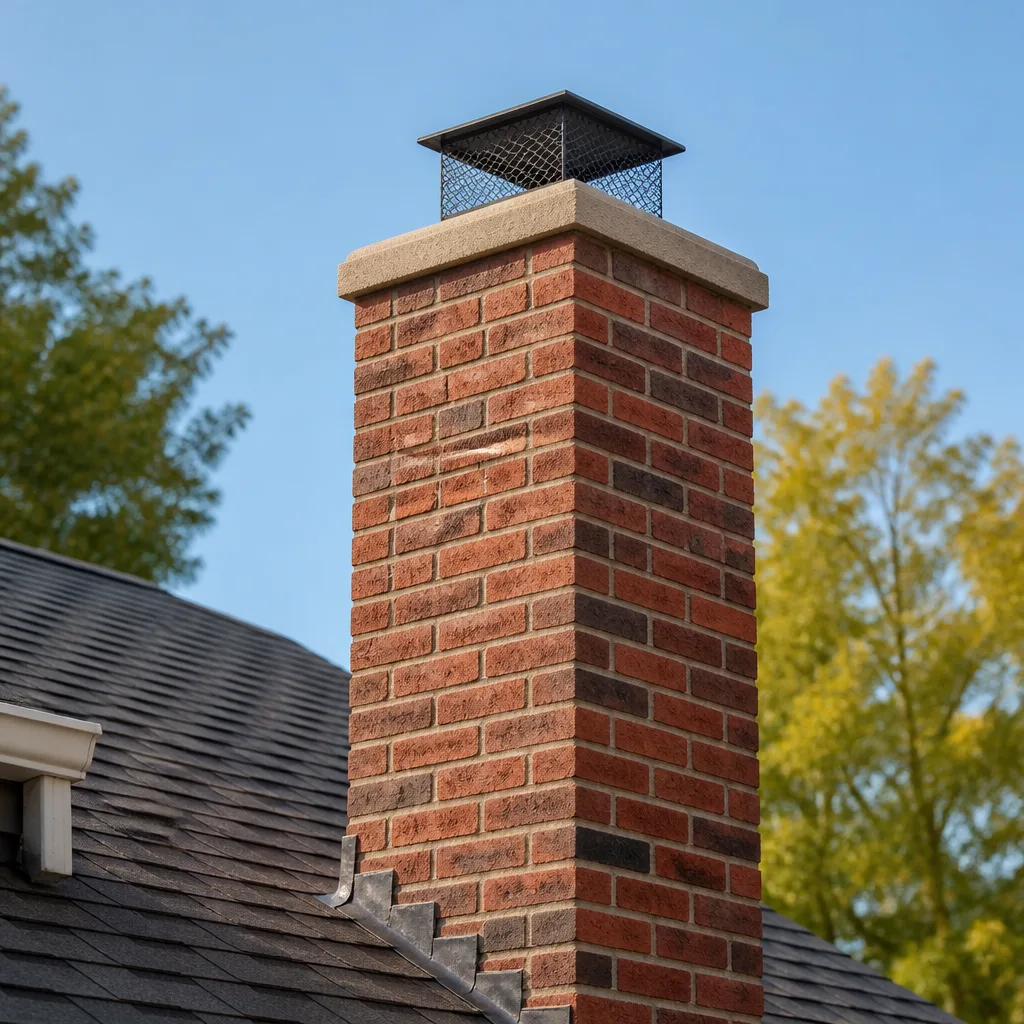 Masonry repair
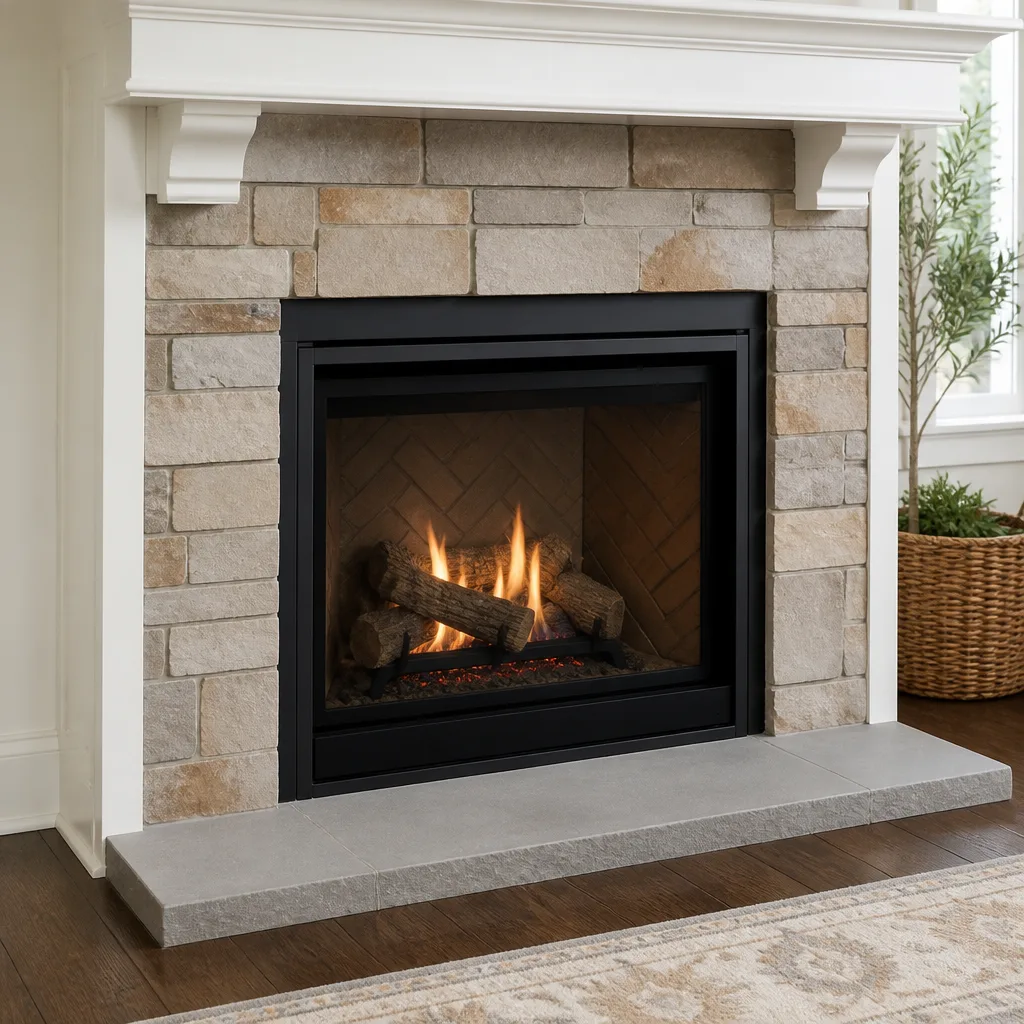 Gas fireplace service
Level 1 sweep and inspection to the NFPA 211 annual standard - flue, crown, cap, and flashing checked and photographed
Chimney sweep logs do not sweep chimneys. They loosen some creosote - which then falls where a brush and vacuum still have to collect it.
The Complete Guide to Chimney Cleaning in Las Vegas
Most chimney advice online reads like it was written for a house in Vermont. Burn a fire every winter night, clean the flue every year, done. But Las Vegas isn’t Vermont. The average homeowner here burns a fire fewer than 15 nights a year, which sounds like it should mean less maintenance. It doesn’t. In the Las Vegas Valley, heat, dust, and wildlife create chimney hazards that have very little to do with heavy burning, and skipping a cleaning because you “hardly use it” is exactly how a blocked flue turns into a house fire. In this guide, we’ll walk through what actually builds up inside a Las Vegas chimney, what it looks like on camera, what inspections you really need, and what a proper cleaning should cost. For more guides & resources on keeping your home safe, explore our blog.
Quick Answer
A chimney cleaning in Las Vegas typically costs $150 to $300 for a standard Level 1 sweep and visual inspection, and most Las Vegas homeowners need one every one to two years even with light fireplace use. The real risk here isn’t thick creosote from heavy burning. It’s debris, animal nesting, and heat-damaged mortar that quietly block or crack the flue while nobody’s paying attention. A professional sweep clears the blockage and documents the condition with photos so you can see exactly what was found.
Styles & brands we work with
Table of Contents
- Why Las Vegas Chimneys Are Different From Everywhere Else
- What Actually Builds Up in a Las Vegas Chimney
- Summer Heat and Your Mortar: The 115-Degree Problem
- Wildlife in Your Flue: Swifts, Starlings, and Roof Rats
- Level 1 vs Level 2 Inspections in Plain English
- How Much Does Chimney Cleaning Cost in Las Vegas?
- What a Proper Chimney Cleaning Actually Includes
- Proof, Not Promises: Why Photo Documentation Matters
Why Las Vegas Chimneys Are Different From Everywhere Else
Chimney maintenance advice is dominated by cold-climate thinking. The CSIA (Chimney Safety Institute of America) recommends annual inspection, and most national content frames that around heavy winter use, creosote accumulation, and cold-weather masonry stress. Las Vegas breaks that model in three specific ways.
First, we use our fireplaces less. Way less. A homeowner in Summerlin or Henderson might light a fire on the handful of genuinely cold nights between November and February, then not think about the fireplace for the next nine months. That means creosote (the flammable tar residue left behind when wood smoke cools and condenses) builds up slowly, which is good. But it also means the fireplace sits dormant through the entire spring, summer, and fall, and that’s when the other problems move in.
Second, our climate is brutal on masonry. Las Vegas sees summer temperatures above 110°F for weeks at a time, with surface temperatures on a rooftop chimney reaching 140°F or higher. The constant expansion and contraction of mortar joints and chimney crowns is a year-round process here, not a freeze-thaw problem like the Northeast. Hairline cracks open up in the crown and cap, and those cracks are invitations for water and pests.
Third, our wildlife pressure is different. The Las Vegas Valley, especially neighborhoods near washes, golf courses, and the foothills, has a thriving population of birds and rodents that see an unused chimney flue as premium real estate. We’ll get into the specifics shortly, but the short version is this: in Las Vegas, the most dangerous thing in your chimney is usually not soot. It’s a nest, a dead animal, or a debris plug that you don’t know is there.
That’s why the standard national checklist doesn’t quite fit. Las Vegas homeowners need to think about their chimney less like a New Englander and more like a desert property owner: inspect after every windy season, check for animal activity after every summer, and clean before the first burn of the season, even if the fireplace only got used a few times last year. For a complete maintenance calendar, see our Seasonal Chimney Cleaning Care for Las Vegas: Year-Round Homeowner’s Guide.
What Actually Builds Up in a Las Vegas Chimney
Ask most people what’s inside a dirty chimney and they’ll say “soot” or “creosote.” That’s partially right. But in our experience cleaning hundreds of Las Vegas chimneys over more than 20 years, what we actually find falls into five categories, and the ranking by frequency is not what most homeowners expect.
- Debris and dust. Las Vegas is a dusty city. Monsoon season kicks up dust, construction kicks up dust, and the constant wind pushes leaves, twigs, and fine particulate onto rooftops. If your chimney cap is damaged or missing, a surprising amount of that material ends up in the flue. Even a fine layer of dust and grit mixed with a little moisture becomes a paste that narrows the flue and makes your fireplace draw poorly.
- Bird and rodent nesting material. Twigs, grass, fur, feathers, and unfortunately sometimes carcasses. A flue without a proper cap and screen is a sheltered, predator-free cavity, and animals take advantage of it. We’ve pulled nests the size of a basketball out of Las Vegas chimneys on more than one occasion.
- Creosote, in lighter stages. Because fireplaces here get used less, we more often see Stage 1 or Stage 2 creosote (flaky or crunchy tar deposits) rather than the heavy Stage 3 glazing common in cold climates. But even light creosote is flammable, and when it coats the flue alongside debris, the combined material ignites more easily than either would alone.
- Spalled brick and mortar fragments. As heat cycles break down the interior masonry, small pieces of brick and mortar flake off and fall into the flue or accumulate on the smoke shelf. This material doesn’t just block airflow. It’s a sign that the structural integrity of the chimney is degrading, which is a chimney repair in Las Vegas issue rather than a simple cleaning.
- Water damage residue. If the chimney cap or crown is cracked, monsoon rain and the occasional winter storm get in. Water damage shows up as efflorescence (white mineral staining), rust on the damper, and softened mortar that accelerates all the other problems on this list.
This is why a proper cleaning isn’t just “running a brush up the flue.” It’s removing all of the above, then evaluating what the presence of each material tells you about the condition of the chimney. If we pull out a half-pound of mortar chips, the sweep is the least of your concerns. The conversation needs to be about the crown, the cap, and the upper flue tiles.
And yes, the classic creosote fire risk still applies. Even light creosote can ignite at 451°F, and a debris-filled flue burns hotter and faster than a clean one. The difference in Las Vegas is that the fire risk often comes from the combination of creosote and debris, not from heavy creosote alone.
Summer Heat and Your Mortar: The 115-Degree Problem
Here’s a scenario we see every October. A homeowner in Anthem or Mountain’s Edge calls us because their chimney “looks fine but smells weird” or they noticed a small water stain on the ceiling near the fireplace. They haven’t used the fireplace in six months. They assume nothing has changed since last winter. But something has changed, and it happened during the hottest months of the year.
That’s because Las Vegas summer heat is doing sustained damage to chimney masonry whether the fireplace is used or not. Here’s what happens physically. The outer layer of brick and mortar expands when the sun hits it, reaching surface temperatures far higher than the ambient air. At night, it contracts as temperatures drop 30 to 40 degrees. Repeat that cycle 90 to 100 times over a single summer and you get hairline cracking. The crown, the mortar cap at the very top of the chimney, takes the worst of it because it faces the sun directly all day.
Once those cracks open up, two things follow. Water gets in during monsoon storms, and when that water heats up again, the expansion pressure widens the cracks. The damage compounds year after year, and it happens silently, because nobody’s on their roof in July checking the crown. By the time the homeowner notices a symptom, like pieces of mortar on the ground near the chimney or a slow leak that stains the ceiling, the repair is already bigger than it needed to be.
This is why fall inspection matters in a desert climate. It’s not about “getting ready for burning season.” It’s about catching the damage that summer just did. A proper fall chimney inspection in Las Vegas should include a close look at the crown and cap for new cracking, the upper flue tiles for shifting, and the firebox for signs of water staining. If it’s been more than two years, schedule it before the weather cools and the crews book up.
One more thing. Heat stress doesn’t just affect masonry. It affects metal components too. Chimney caps, dampers, and the metal flashing where the chimney meets the roof all expand and contract at different rates than the surrounding materials. Loose flashing is one of the most common sources of “mystery leaks” we find on Las Vegas homes, and it’s often discovered during a chimney cleaning or gas fireplace repair visit, not during a roofing inspection.
Wildlife in Your Flue: Swifts, Starlings, and Roof Rats
If you’ve never thought about what a blocked flue looks like, let us describe it from the camera footage we pull on a typical Las Vegas job. It’s not a dramatic wall of black tar. It’s usually a dense, fibrous mat of twigs and grass, sometimes with feathers woven in, compressed about halfway up the flue. Above it, a handful of droppings. Below it, a faint smell that makes sense the moment you see the nest.
Las Vegas has three main culprits when it comes to chimney wildlife:
- Chimney swifts. These small, cigar-shaped birds are famous for nesting inside chimneys. They’re protected under federal law during nesting season, which means you can’t remove an active nest. They arrive in spring and leave by late summer. The nest they build is tiny compared to what accumulates over multiple years.
- European starlings. Not protected the way swifts are, and much more aggressive about nesting. A starling nest is bulkier, messier, and stays in place year-round if nobody removes it. Starlings also return to the same flue year after year unless a proper cap goes on.
- Roof rats. Common in Las Vegas neighborhoods with mature landscaping, especially near fruit trees, palms, and irrigation. Roof rats are excellent climbers and will enter a flue through a damaged cap or an open damper. What they leave behind includes nesting material, droppings, and, unfortunately, sometimes dead animals. A dead roof rat in a flue is one of the worst smells a homeowner can experience, and it doesn’t go away on its own.
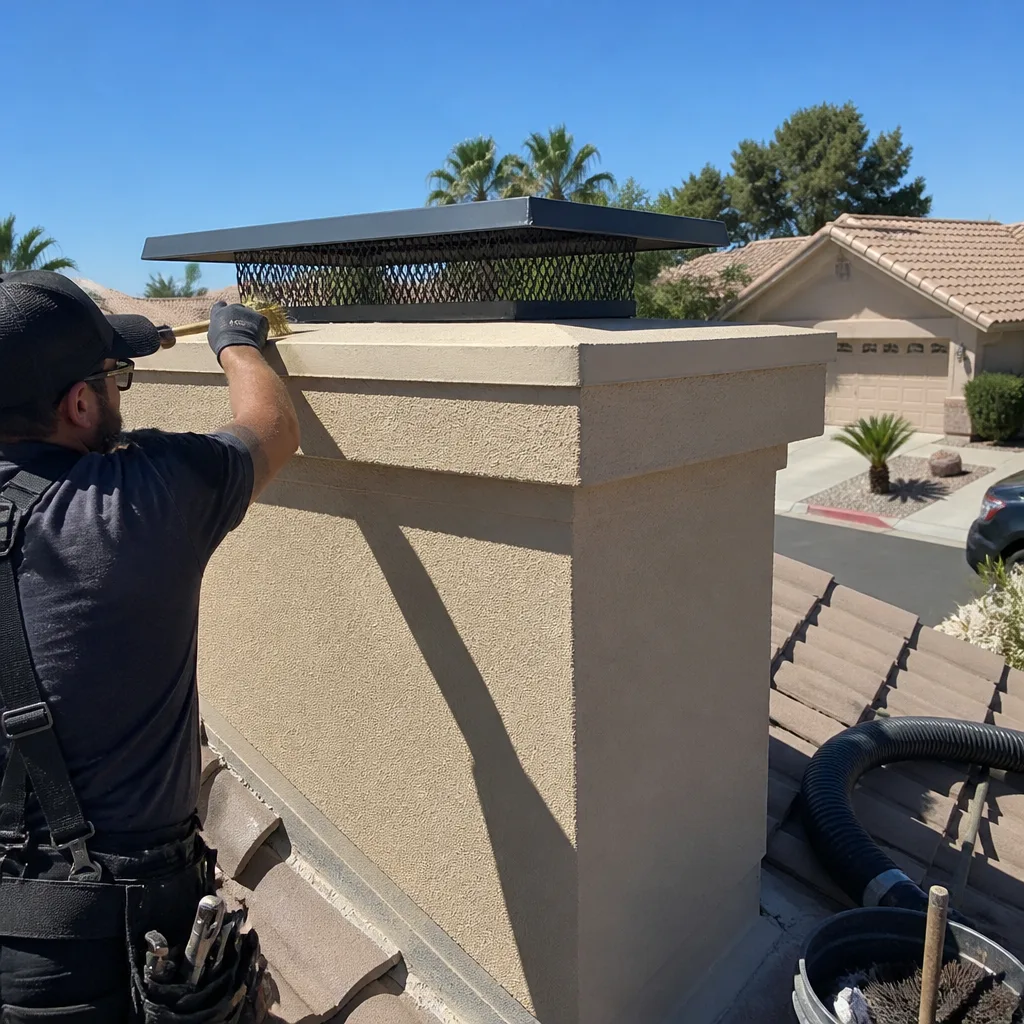
The fix for all three is straightforward: a properly fitted cap with a pest screen, installed by someone who knows how to secure it against Las Vegas wind. But before the cap goes on, the flue needs to be cleared and inspected. You don’t want to seal animals inside, and you don’t want to install a cap over a flue that already has structural damage.
What does a blocked flue actually look like on camera? The footage usually shows a constriction in the flue, visible debris resting on the smoke shelf, and sometimes a clear line where the nest stops and the open flue resumes. A block of 50% or more turns your fireplace into a carbon monoxide vent into the house rather than out of it. This is not a “maybe get it checked” situation. It’s a “do not light a fire until this is cleared” situation.
Level 1 vs Level 2 Inspections in Plain English
The chimney industry uses three inspection levels defined by the NFPA (National Fire Protection Association), and the names can confuse people. Here’s the plain-English version.
A Level 1 inspection is the standard check you get with a routine cleaning. The technician examines the accessible parts of the chimney: the firebox, the damper, the flue that can be seen from above and below, and the visible exterior. No special tools beyond a flashlight and the camera we send down the flue. This is appropriate if nothing has changed since the last inspection: same fireplace, same fuel, same usage pattern, no known problems.
A Level 2 inspection is more thorough and is required by code when something has changed: you bought the house, you changed the appliance or fuel type, you had a chimney fire, an earthquake or severe storm, or the chimney has been relined. A Level 2 includes everything in Level 1 plus access to areas like the attic, crawlspace, and roof, often with a camera that documents the full interior of the flue.
So which does a Las Vegas homeowner actually need?
If you bought your house in the last year and have never had the chimney inspected, you need a Level 2. We see more damage on “new to you” chimneys than on any other category, because the previous owner often spent years deferring maintenance and the home inspection didn’t go deep on the flue.
If you’ve owned the home for years, use the fireplace lightly, and have had regular cleanings, a Level 1 with camera documentation is usually enough. But if your chimney sits unused for most of the year, and especially if you’re in an area with heavy bird pressure like Green Valley or anywhere near the Wetlands, consider a Level 2 every few years to check what’s been building up between cleanings.
One more distinction worth making. A “chimney sweep” and a “chimney inspection” are not the same thing, even though they’re usually done together. The sweep removes material from the flue. The inspection evaluates the condition of the chimney system itself. At Hadley Chimney Las Vegas, every cleaning includes an inspection, and every inspection includes camera footage you can review yourself.
How Much Does Chimney Cleaning Cost in Las Vegas?
Chimney cleaning in Las Vegas typically runs between $150 and $300 for a standard Level 1 sweep and visual inspection on a single-flue residential fireplace. The range depends on the flue’s condition, the amount of buildup, roof access difficulty, and whether you’re adding a Level 2 inspection, which usually adds $100 to $200. Here’s a more detailed look at what you can expect:
| Service | Typical Las Vegas Range | What It Includes |
|---|---|---|
| Standard chimney sweep + Level 1 inspection | $150 – $300 | Flue brushing, debris removal, damper check, visual inspection, basic photo documentation |
| Level 2 inspection (standalone or add-on) | $100 – $200 additional | Camera inspection of full flue interior, attic/crawlspace access, written condition report |
| Chimney cap replacement or installation | $150 – $400 installed | Properly fitted cap with pest screen; materials vary by brand |
| Dryer vent or multi-flue cleaning | $80 – $150 per additional flue | Typically discounted when bundled with fireplace cleaning |
| Crown repair or resealing | $250 – $800 | Depends on crack severity and material; addresses leaks at the top of the chimney |
These are Las Vegas market rates, pulled from what we see daily. They’re not a national average. New York and Chicago run higher; some rural markets run lower. Las Vegas lands in the middle, influenced by high roof access difficulty in the summer and a relatively small pool of qualified chimney technicians in the Valley.
What should you look for in a quote? A written price before work starts. That’s not a nice-to-have. It’s the single biggest signal that you’re dealing with a company that won’t inflate the bill once the technician is on the roof. At Hadley Chimney Las Vegas, that’s our standard: the price gets written down before anyone picks up a brush, and it doesn’t change unless the inspection uncovers a separate repair, which we’ll show you on camera before quoting anything.
What a Proper Chimney Cleaning Actually Includes
Here’s what should happen when you book a professional chimney cleaning in Las Vegas. If a company’s process is missing steps, the price might look lower, but you’re paying for less than a real cleaning.
- Setup and protection. The technician lays down drop cloths around the fireplace, seals the firebox opening to control dust, and sets up a HEPA vacuum. A proper cleaning is not a dusty mess in your living room. If a company doesn’t mention floor protection, ask.
- Initial visual check. Before any brushing starts, the tech looks at the firebox, damper, and what’s visible from the top of the chimney. This step catches obvious problems, like a missing cap or an animal nest visible from the top, before the cleaning begins.
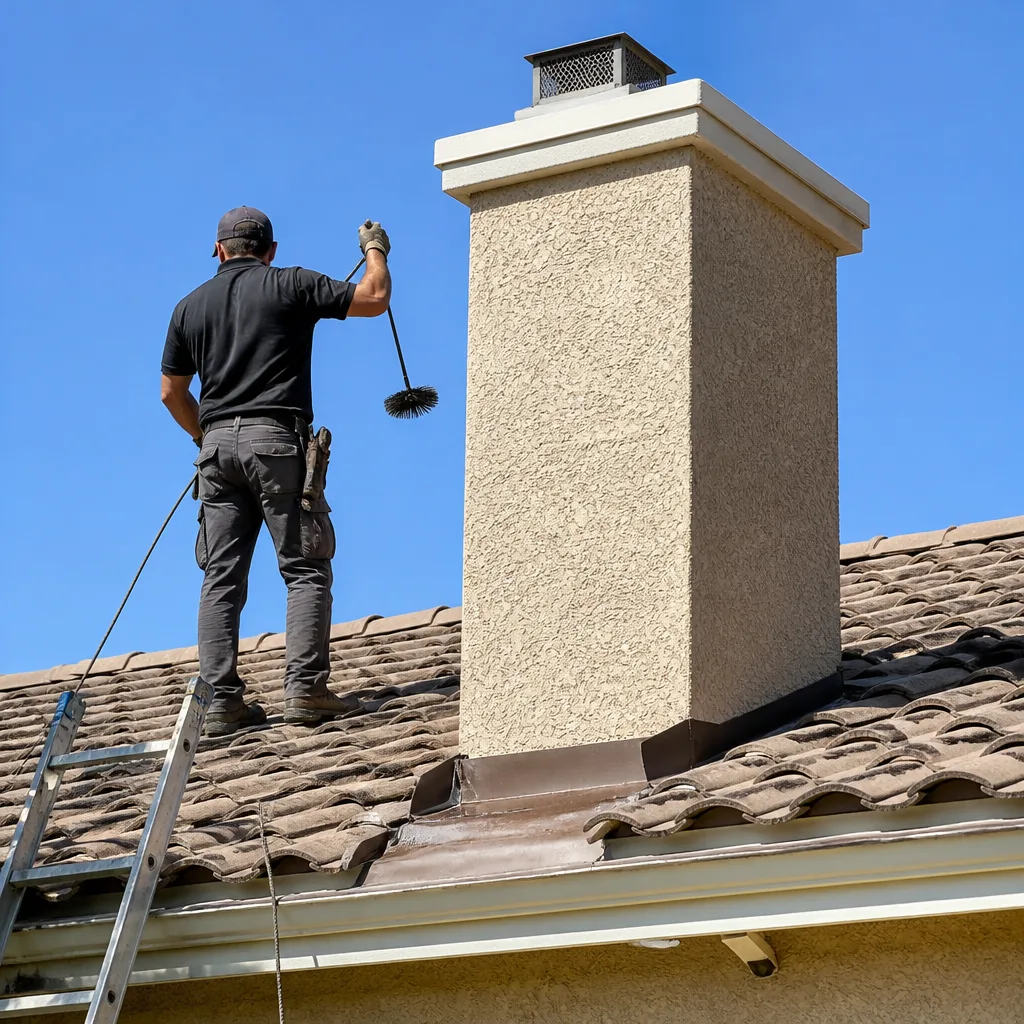
- Flue brushing. Using brushes sized to your flue dimensions, the tech removes creosote, soot, and loose debris from the full height of the flue. Brushing is done from top down or bottom up depending on the setup, and it should be followed by vacuuming from the firebox side.
- Debris removal from the smoke shelf. The smoke shelf, the flat area behind and above the damper, is where most debris collects. It’s often missed by quick cleanings. A proper sweep clears this specifically.
- Camera inspection. We run a camera up the flue to document the interior condition after cleaning. This is where you see whether the flue tiles are cracked, whether the mortar joints are sound, and whether anything was left behind. This footage should be shared with you, not just filed away.
- Damper operation check. The damper should open and close smoothly and seal reasonably well when closed. A sticky or rusted damper is a common finding in Las Vegas homes, especially if the chimney has had water intrusion.
- Exterior component check. The tech should look at the cap, crown, flashing, and the exterior brick or stone from the roofline. This is where the summer heat damage we talked about earlier shows up.
- Written report and photos. You should leave the appointment with a clear summary of what was found, what was done, and what, if anything, needs attention. At Hadley, that includes before-and-after photos and a written price for any recommended repairs, quoted before work begins, not after.
You’ll notice this is more than “running a brush up the flue.” That’s the point. A cheap cleaning that skips the inspection is not actually cheaper if it misses a cracked flue tile that turns into a repair later. The cleaning is the entry point. The inspection is where the value lives.
Proof, Not Promises: Why Photo Documentation Matters
Here’s the reality of the chimney trade. Historically, a homeowner would pay for a chimney sweep, get a verbal “you’re good to go,” and never see proof of anything. The technician might have done a thorough job. Or they might have spent fifteen minutes, skipped the smoke shelf, and pocketed the full fee. You had no way to know.
That’s the problem we built Hadley around. Every service visit in Las Vegas includes before-and-after photo documentation. You see the condition of your flue before the cleaning and the clean flue after. You see the nest if there’s a nest. You see the cracked crown if there’s a cracked crown. You don’t have to take anyone’s word for anything.
This matters for three practical reasons. First, it creates a record. When you have photos from this year’s cleaning, you can compare them to next year’s and see whether conditions are changing. That’s how you catch a slowly widening crack or a cap that’s starting to rust.
Second, it protects you from being oversold. If a technician says you need a $2,000 repair, you should be able to look at a photo of the problem with your own eyes. If the photo is blurry or the tech “forgot” to take one, that’s a red flag. We’ve built a reputation in Las Vegas on showing customers exactly what we see, even when the honest answer is “this can wait.”
Third, it’s documentation for insurance and resale. If you ever need to make a claim or explain chimney condition to a home buyer, having dated photos from a professional inspection is solid evidence.
Hadley operates under The Relay Visibility Guarantee, which is exactly what it sounds like: live arrival tracking, before-and-after photo documentation, and a written price before work begins, on every job. It’s part of the Relay Home Co. family standard, and it’s how we think the whole trade should work. You shouldn’t have to stand in your driveway wondering if the chimney guy is coming. You should get a text when we’re ten minutes out, and you should see photos of what we found before we leave.
How Often Should You Clean Your Chimney in Las Vegas?
The short answer: every one to two years for most Las Vegas homes, even if you rarely use the fireplace. The long answer depends on usage, wildlife pressure, and the condition of your cap.
If you burn fires regularly during the winter, more than a few nights a month, stick with annual cleaning. That’s the standard CSIA recommendation, and it applies here even though the season is shorter. What creosote you do produce sits in the flue through the long hot summer, and it can harden and become more difficult to remove the longer it sits.
If you burn less than 15 fires a year, which covers a lot of Las Vegas homeowners, every two years is often enough, provided you have a properly installed cap and screen. The cap is the variable that matters most. Without it, the flue is open to debris and animals year-round, and even two years can be too long to wait.
If you’ve had animal intrusion before, or if you live in a part of the Valley where chimney swifts and starlings are common (the older neighborhoods near downtown Las Vegas, the areas around the Las Vegas Wash, and anywhere with mature trees), schedule annual checks until you’ve got a cap that’s keeping them out. Once the cap is in place and confirmed effective, you can step back to every two years.
And one blanket rule that applies everywhere: after any chimney fire, even a small one, the chimney must be inspected before it’s used again. Not cleaned. Inspected. A chimney fire can crack flue tiles and damage the liner in ways that aren’t visible from the outside, and a cleaning alone won’t tell you whether the chimney is safe.
What Actually Happens If You Skip It?
We don’t do scare-selling, and we won’t tell you that skipping one year of cleaning means your house is in imminent danger. What we will tell you is what skipping it actually changes, and the honest answer is that it depends on what’s been building up in there.
Skip it for a year and the most realistic outcome is that the flue gets a little dirtier, the creosote layer gets a little thicker, and next year’s cleaning takes a little longer. That’s true for a lot of homes. But if the cap is damaged or missing, skipping a year can mean the difference between a routine cleaning and finding a full animal nest. And if the crown has been cracking through a hard summer, skipping a year can mean the difference between resealing a small crack and rebuilding a section of the crown after water damage spread.
The real risk isn’t just chimney fire. It’s carbon monoxide. A blocked or partially blocked flue sends combustion gases back into the house instead of out through the chimney. Carbon monoxide is odorless and invisible, and the symptoms of low-level exposure (headaches, fatigue, nausea) are easy to attribute to something else. A flue that’s 50% blocked by a nest is a carbon monoxide risk. Period.
So the honest summary: skipping a cleaning for a year is usually fine if your cap is intact and you haven’t been burning heavily. Skipping it for two or three years while the cap is missing is rolling the dice on whether the flue is still clear. The problem is that you can’t know which situation you’re in without looking, and the camera inspection is the only way to see the truth.
Gas Fireplaces and Chimney Cleaning: What Changes?
A lot of Las Vegas homes have converted to gas fireplaces. Maybe the original wood-burning fireplace was converted, or maybe the house was built with gas logs from the start. This changes the chimney cleaning conversation in several ways.
Gas fireplaces don’t produce creosote. The combustion is cleaner, and there’s no wood tar to coat the flue. But they do produce water vapor and carbon monoxide, and if the flue is blocked, the carbon monoxide risk is exactly the same as with a wood-burning fireplace. Gas fireplaces also attract dust, spider webs, and the occasional bird or rodent, and their venting systems are more sensitive to obstruction because they’re designed for lower exhaust temperatures and lower draft.
The inspection priority for gas is different too. You’re less concerned with creosote removal and more concerned with the condition of the venting, the integrity of the flue liner, and the safety of the gas connections. At Hadley, our gas fireplace repair in Las Vegas service includes a safety check of the burner, pilot, and venting, because a gas fireplace that “works fine” can still be venting improperly.
Gas fireplaces still benefit from a periodic professional look. We recommend at least every two years for a vent check and flue inspection, even if there’s no brushing involved. If the home was recently bought or the fireplace has never been inspected, a Level 2 is the right starting point.
See the difference
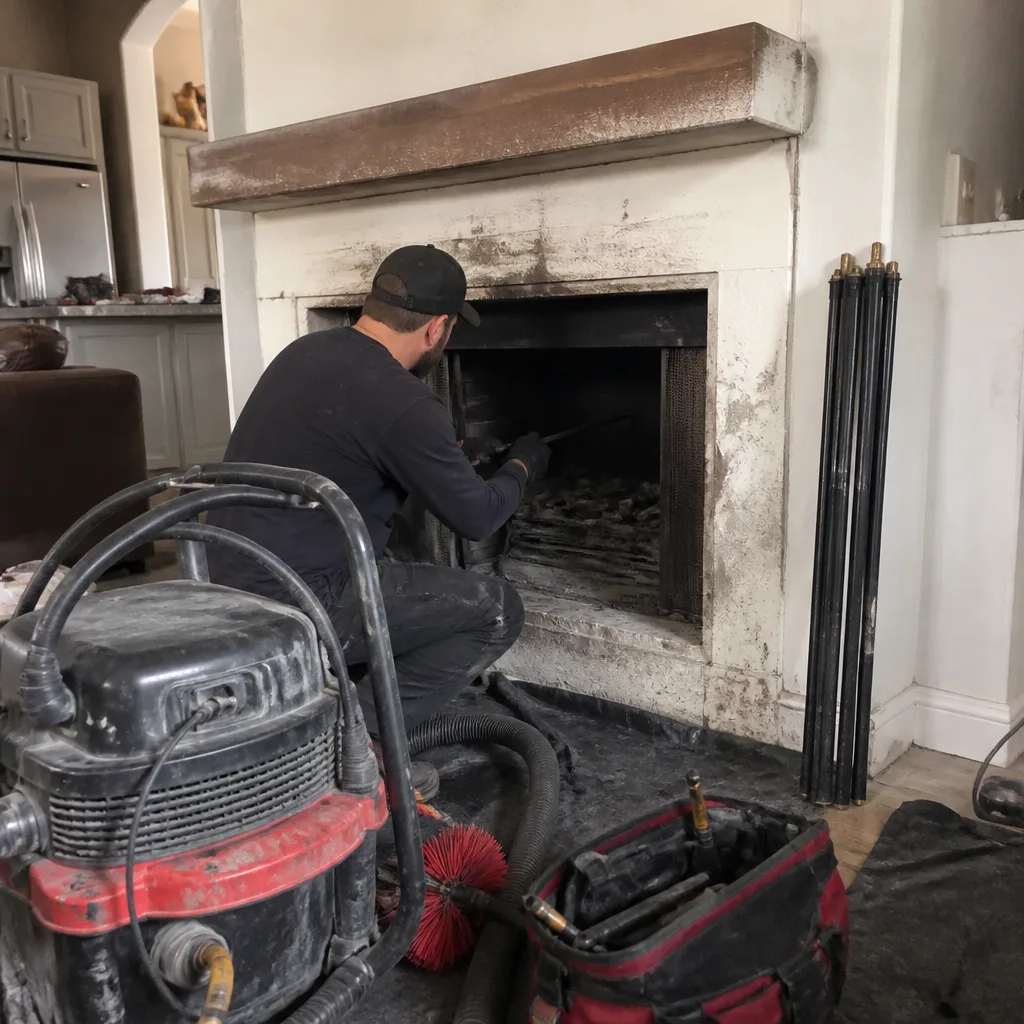 Before
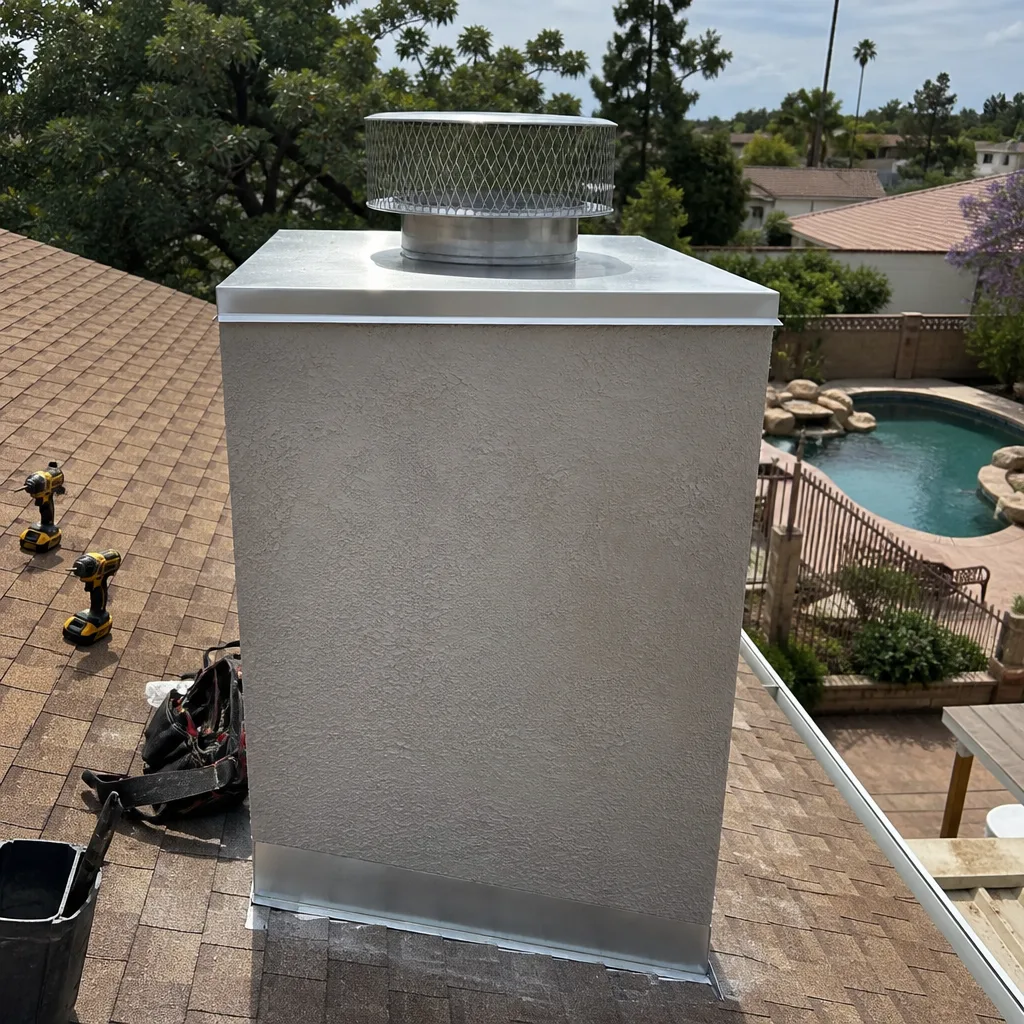 After
After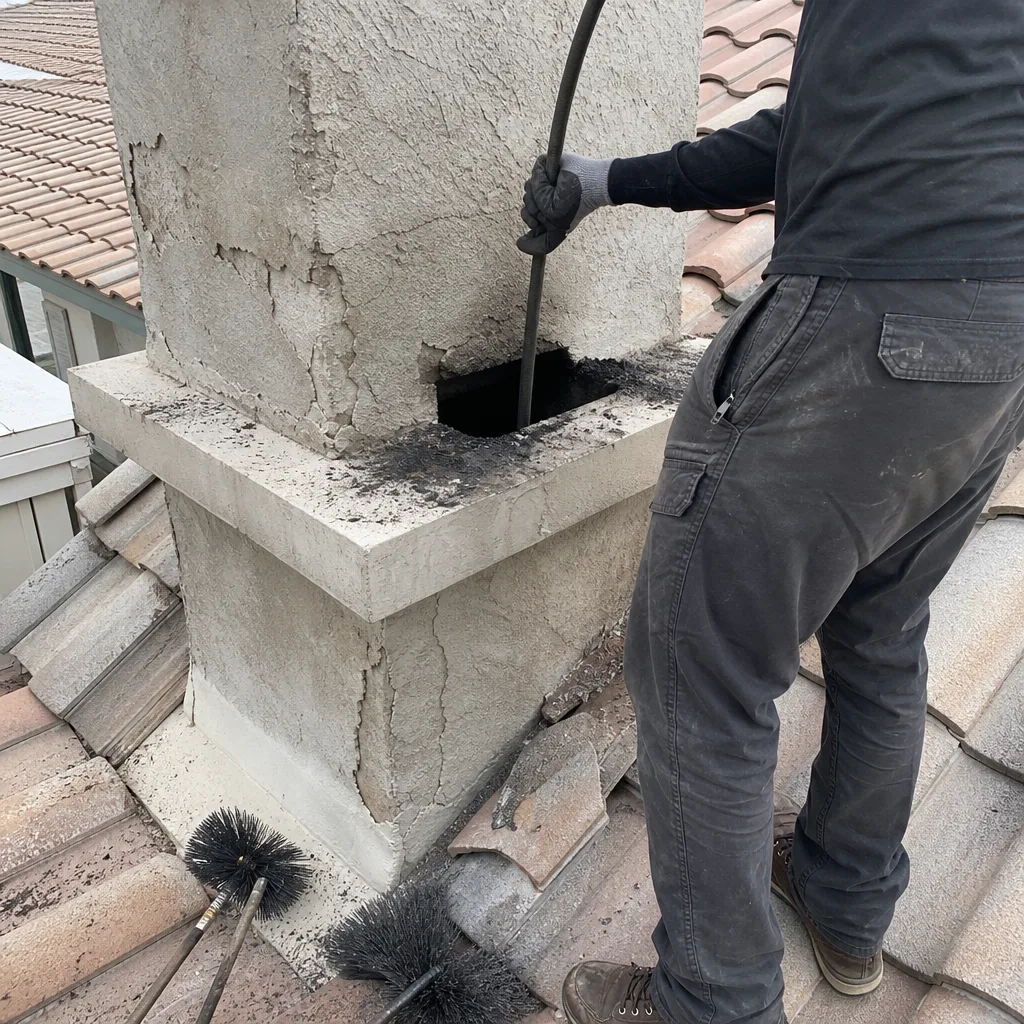 Before
 After
After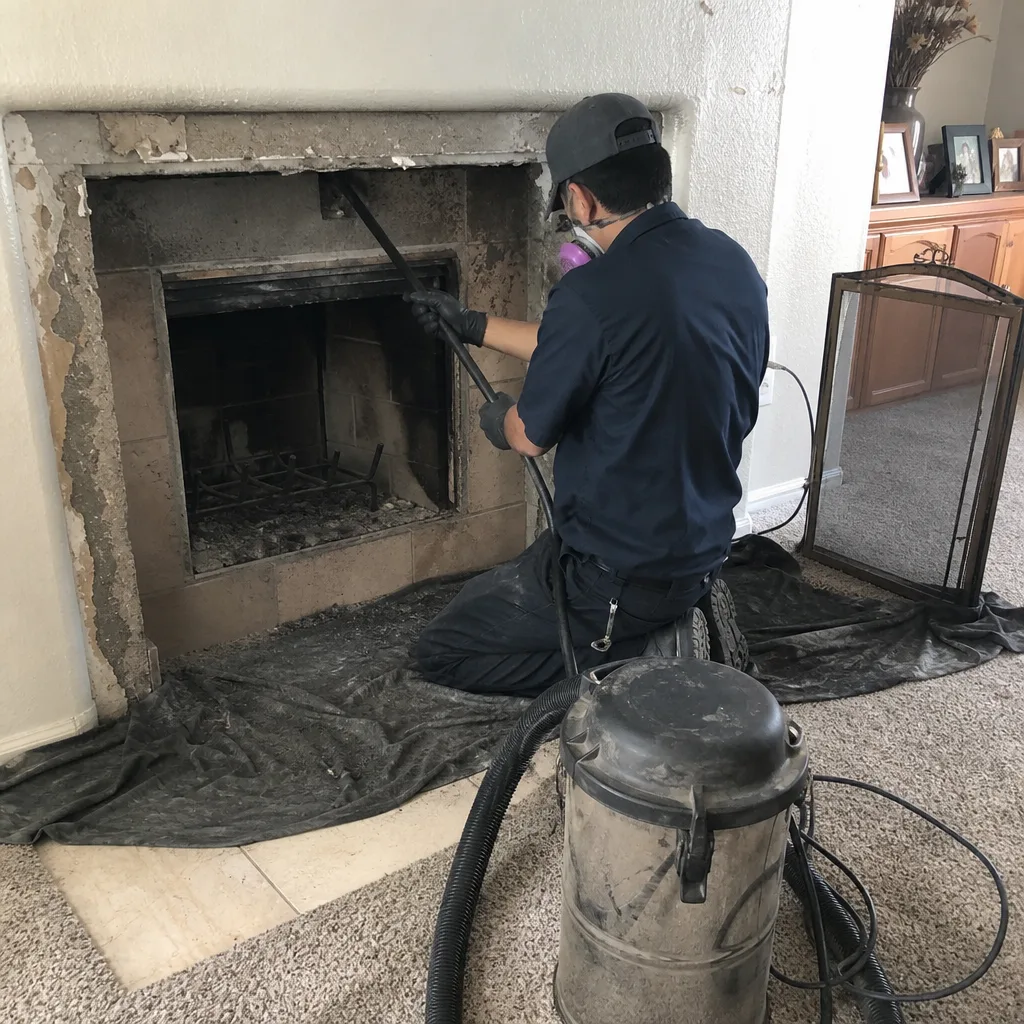 Before
 After
AfterChoosing a Chimney Company in Las Vegas: What to Look For
You’ve got options when it comes to chimney cleaning in Las Vegas, and the range in quality and price is wider than you’d think. Here’s what separates a company worth hiring from one worth skipping.
Ask about photo documentation. If they don’t offer it, ask why. In 2025, there’s no technical reason a chimney company can’t show you what your flue looks like. The companies that don’t are usually the ones that don’t want you to see what they’re doing (or not doing).
Ask about pricing before the appointment. A reputable company can give you a price for a standard cleaning over the phone and commit to it in writing before the technician starts. The old “we’ll see when we get there” pricing model is how surprise charges happen.
Check for guarantees. A cleaning is a service, but repairs should carry a written guarantee. Our 365-Day Done Right Promise covers every repair with a written guarantee and a free second visit if the repair fails within 365 days. Specific, enforceable, and in writing.
Ask who’s coming to your house. Background-checked, uniformed technicians are the minimum bar. You should know the name of the person who’ll be knocking on your door, and you should get a live arrival window, not a four-hour block.
Look for continuity. A company that’s been operating in Las Vegas since 2003 and still stands behind their work is a different proposition than a new marketing operation that subcontracts the actual work. We’ve been sweeping chimneys in the Valley for over two decades, and our name is on every job.
Common Mistakes to Avoid
- Assuming light use means no maintenance. This is the number one mistake we see in Las Vegas. An unused chimney is not a clean chimney. It’s an empty chamber that debris and animals find very inviting. If you haven’t looked inside in two years, assume there’s something in there.
- Delaying the fall inspection until November or December. The best time to inspect is September or October, after the summer heat has done its damage and before the holiday season fills up every chimney company’s calendar. By December, you’re competing with everyone else who just lit their first fire and smelled something odd.
- Trusting a verbal “it’s fine” without photos. If the technician can’t show you the inside of your flue, you didn’t get an inspection. You got an assertion. Demand visuals.
- Ignoring the chimney cap. The cap is the single most important protective component on a Las Vegas chimney, and it’s the most frequently damaged. A missing or dented cap is an open invitation for everything that flies, crawls, or blows.
- Skipping the damper check. A damper that doesn’t close properly lets conditioned air escape year-round and lets wildlife enter when the fireplace is unused. It’s a two-minute check during a cleaning, and it’s often skipped by rushed technicians.
- Going with the cheapest quote without asking what’s included. A $99 chimney sweep sounds great until you realize it’s just a brushing with no inspection, no camera, no smoke shelf cleaning, and no documentation. You’ll pay for it twice when a real problem gets missed.
When to Call a Professional
Some things you can safely inspect yourself. Look in the firebox with a flashlight and see if there’s obvious debris. Look at the chimney from the ground and check if the cap is still in place. Sniff for damp, musty, or animal smells near the fireplace. But the moment any of these checks turns up something, call a professional.
If you can see debris above the damper, if you smell something that wasn’t there before, if you notice water stains near the chimney or ceiling, if you hear animals in the flue, or if the fireplace has been used for a season or more without a cleaning, don’t light another fire until it’s been inspected. The cost of a chimney sweep is a fraction of the cost of a chimney fire or a carbon monoxide incident, and the peace of mind that comes from seeing clean flue photos is real. Hadley Chimney Las Vegas offers free estimates in Las Vegas. Call (725) 600-0308 to talk to a live person, 24/7, and get a written price before any work starts.
Frequently Asked Questions
A standard chimney sweep in Las Vegas costs between $150 and $300 for a single-flue fireplace with a Level 1 inspection. Level 2 inspections add $100 to $200. Call Hadley at (725) 600-0308 for an exact quote for your home, with the price written before work begins.
Yes, because in Las Vegas the bigger risks in an unused chimney are debris and animal blockage, not creosote. Annual or every-other-year inspection with camera documentation is the only way to confirm the flue is clear. Desert wind and wildlife don’t care how often you burn a fire.
Every one to two years, depending on usage and whether the chimney has a properly fitted cap. Homes with heavy fireplace use should clean annually; light-use homes with a good cap can usually go two years. Homes with repeated animal intrusion should stay on an annual schedule until the entry point is sealed. Call (725) 600-0308 to discuss your specific situation.
In the best case, the flue gets dirtier and next year’s cleaning takes longer. In the worst case, a bird or rodent builds a nest in the flue and partially blocks it, creating a carbon monoxide risk that you can’t detect without an inspection. The outcome depends on whether your cap is intact, and the only way to know is to look.
A sweep removes buildup from the flue. An inspection evaluates the condition of the entire chimney system, including the flue tiles, mortar joints, crown, cap, and damper. At Hadley, every sweep includes an inspection, and every inspection includes camera footage documented for your records.
Yes, and in some ways it’s the smartest time. You avoid the fall rush, and any summer heat damage to the crown or cap is at its most visible. The only consideration is that roof work is harder when temperatures are at their peak, so we schedule roof access in the early morning hours. Call (725) 600-0308 to book a summer cleaning before the seasonal calendar fills up.
The Bottom Line
Chimney cleaning in Las Vegas isn’t about preparing for a long winter of fires. It’s about protecting a chimney that sits idle for most of the year while the desert does its work. Summer heat cracks mortar, wind drives debris into open flues, and birds and rats move into unprotected chimneys. The creosote risk is real but secondary. The blockage and structural risks are primary. Get a proper inspection with photo documentation every one to two years, make sure your cap is intact, and don’t wait until the first cold night to think about your chimney. A clean, documented, properly capped flue is the whole game.
Written by Cory Mitchell, Owner at Hadley Chimney Las Vegas, serving Las Vegas since 2003.