
Last updated October 15, 2026
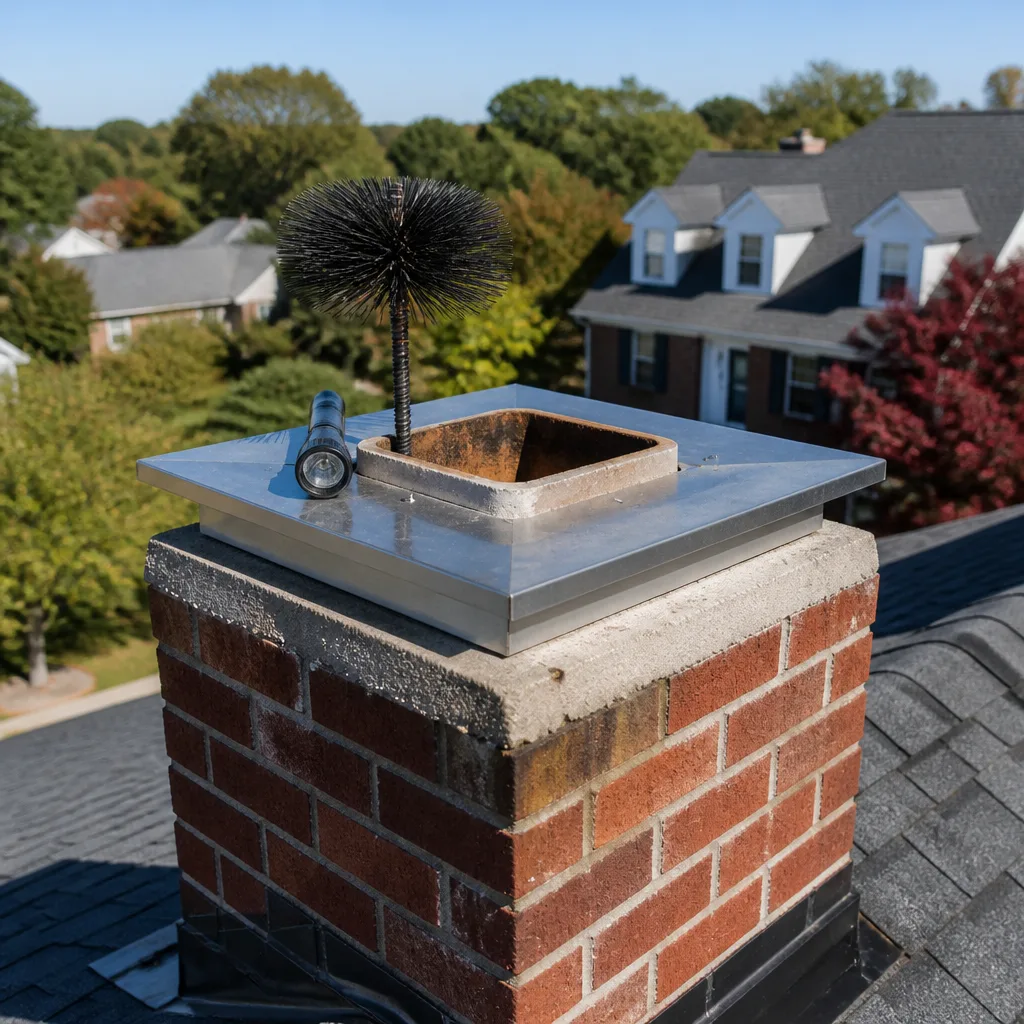 Sweep & inspection
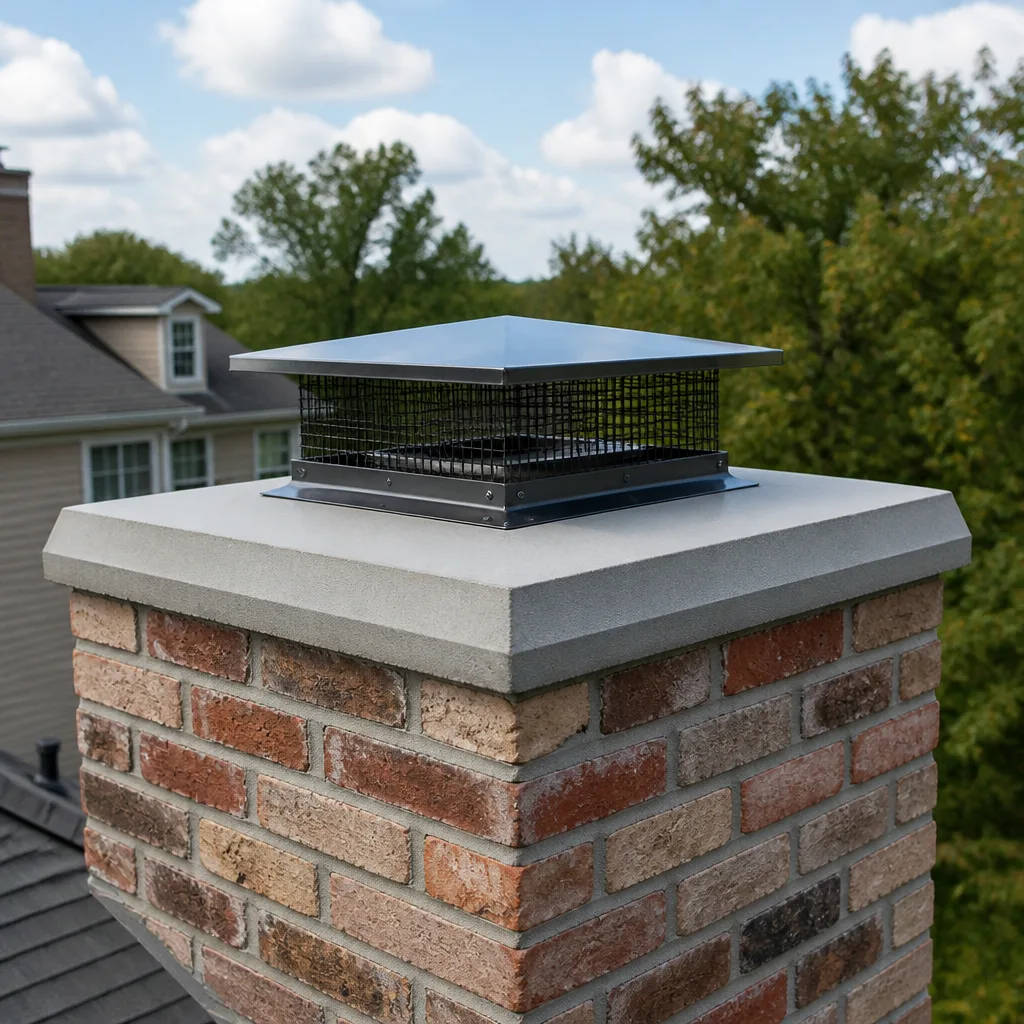 Caps & crowns
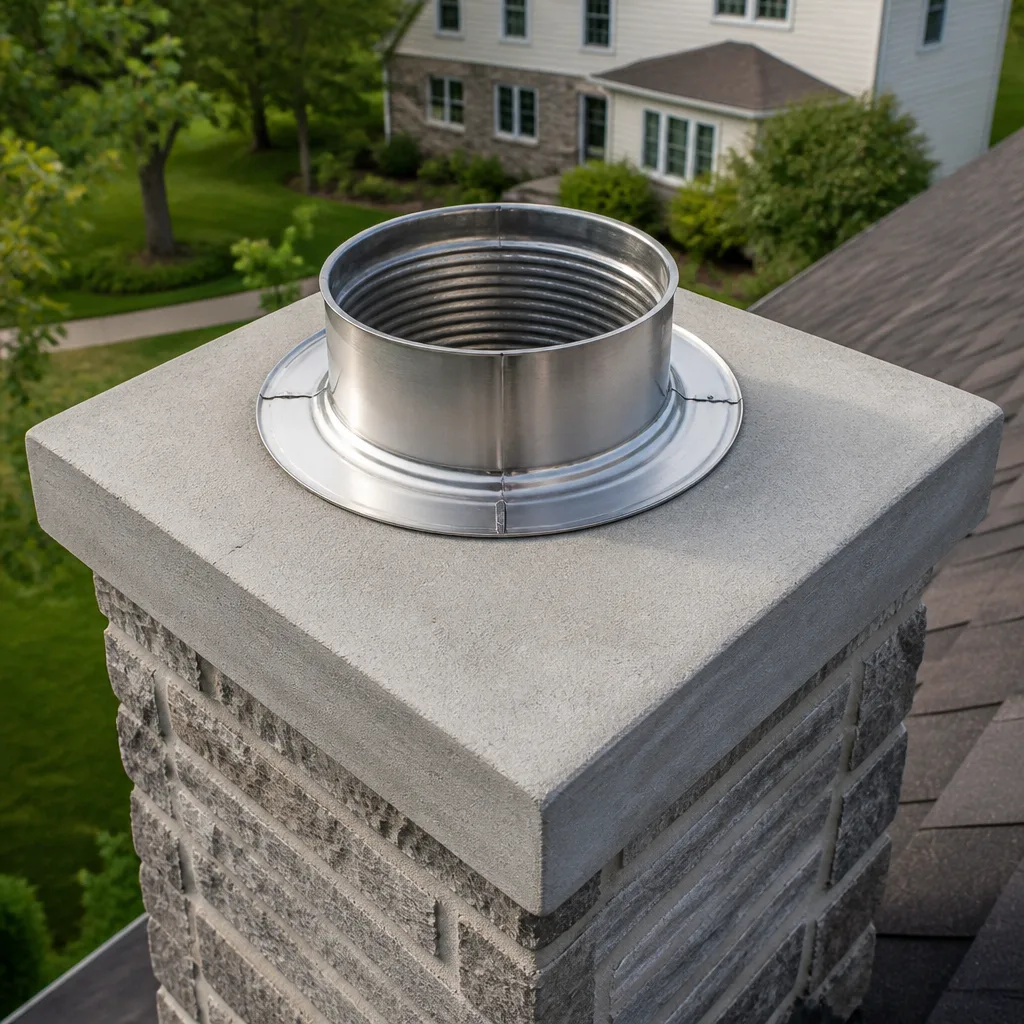 Flue relining
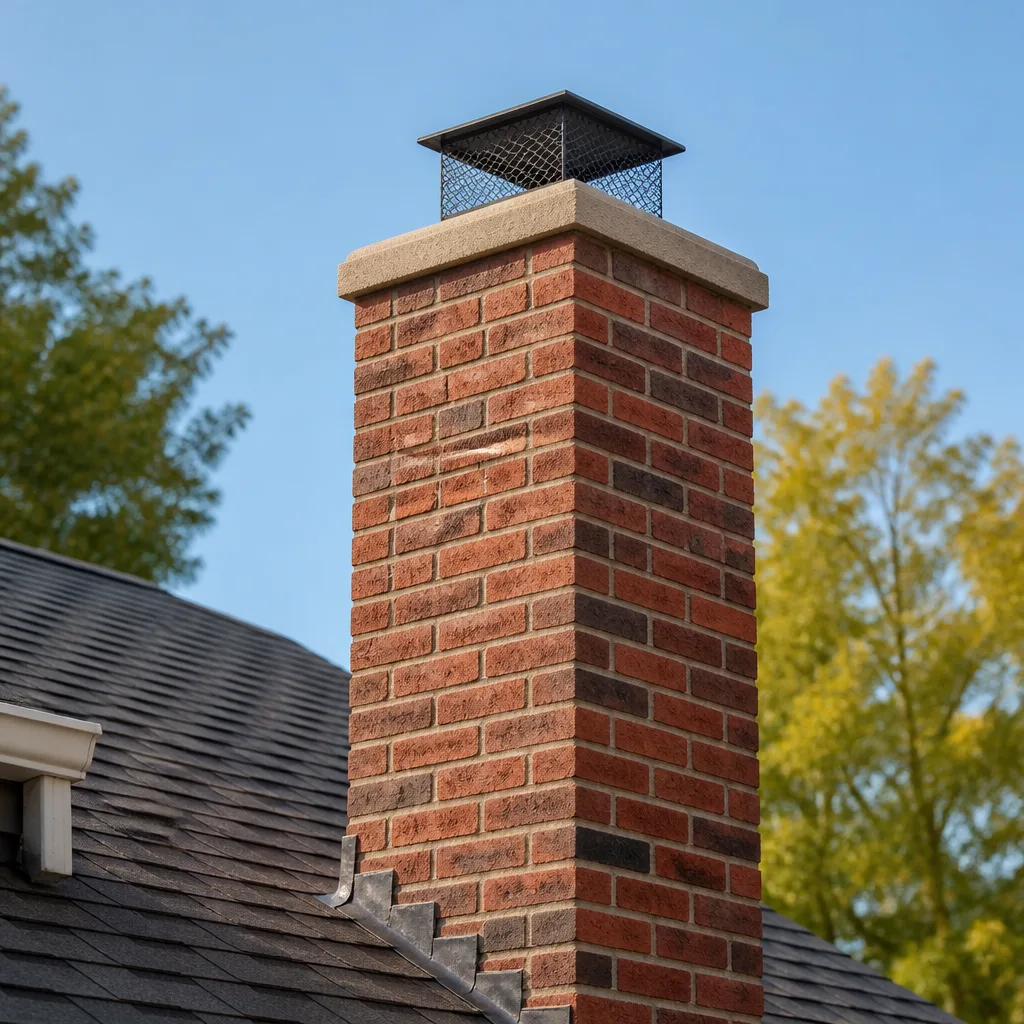 Masonry repair
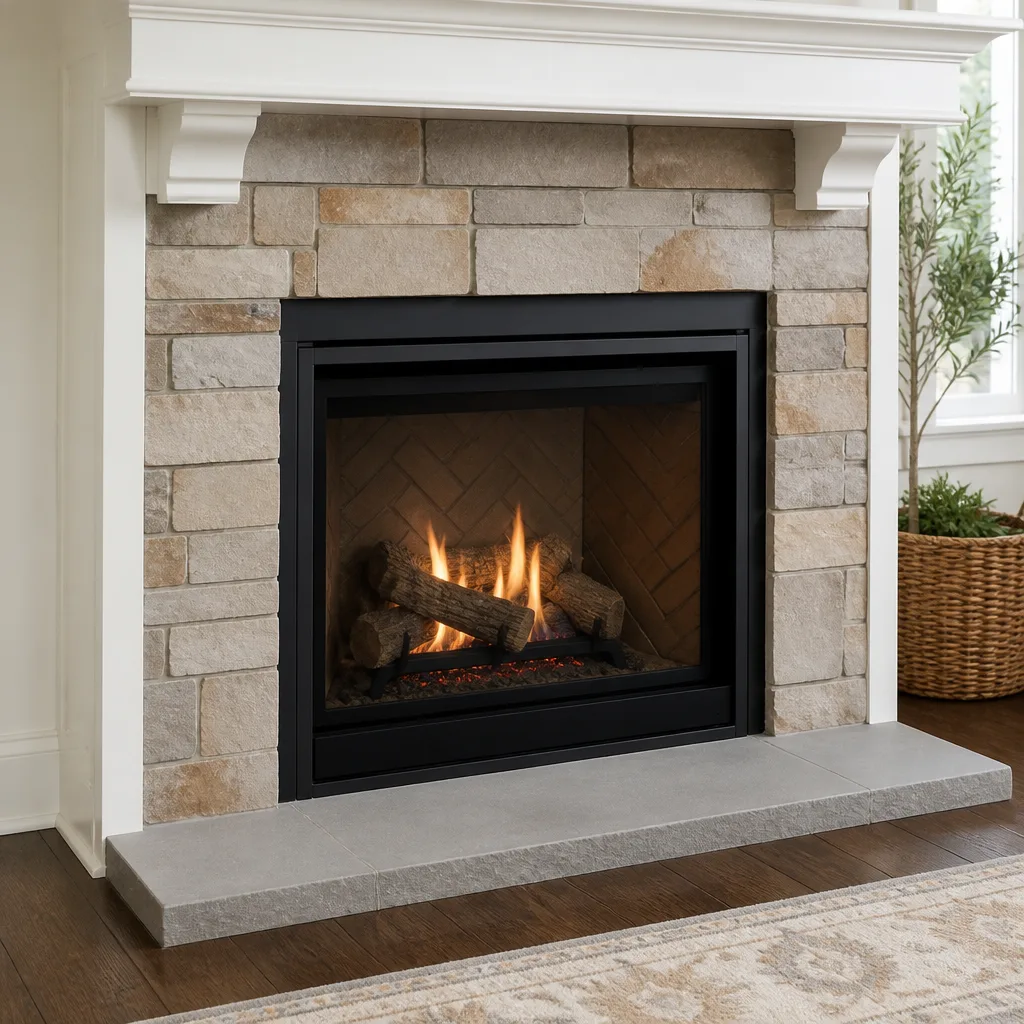 Gas fireplace service
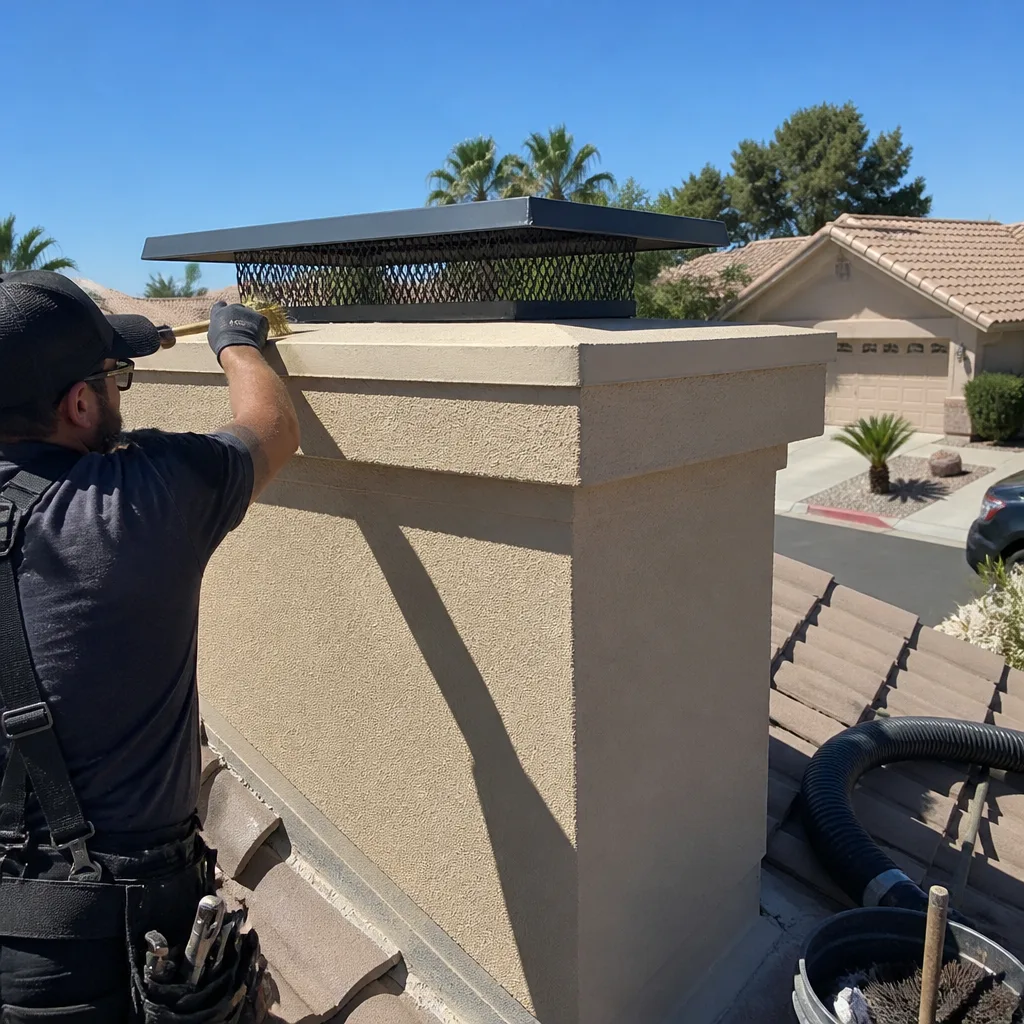
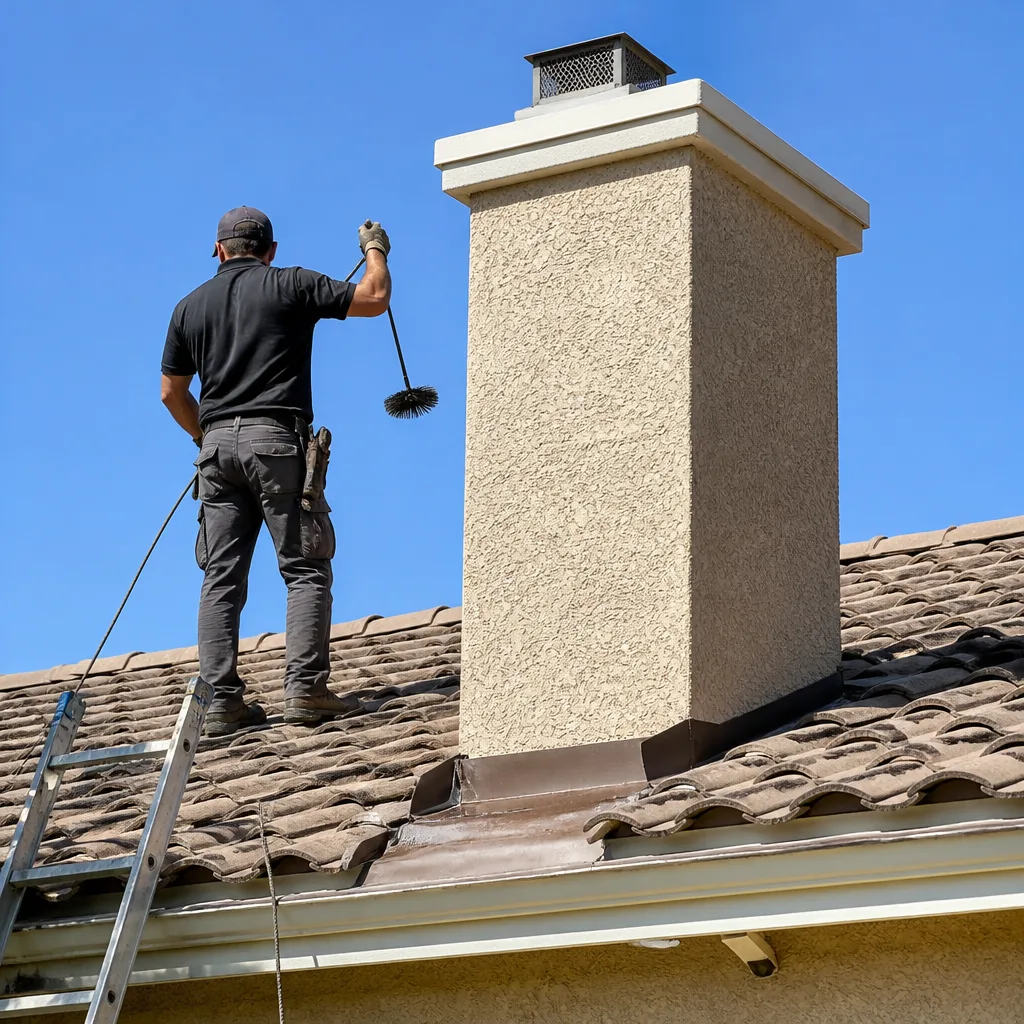
Level 1 sweep and inspection to the NFPA 211 annual standard - flue, crown, cap, and flashing checked and photographed
Chimney sweep logs do not sweep chimneys. They loosen some creosote - which then falls where a brush and vacuum still have to collect it.
Seasonal Chimney Cleaning Care for Las Vegas: Year-Round Homeowner’s Guide
Most national chimney advice tells you to get your fireplace swept every fall. That guidance is written for places like Minneapolis and Boston, where the first cold snap in September sends everyone scrambling to light their first fire. Las Vegas doesn’t work that way. Here, fall is already fire season, and homeowners who wait until October to book a sweep are scheduling their safety check after they’ve already started burning. This guide walks through what actually happens to a chimney in the Mojave Desert across all twelve months, what the summer monsoon season does to your crown and flashing, when the smartest Las Vegas homeowners schedule their one critical annual inspection, and the one off-season habit that matters more here than in any other climate. We’re a Las Vegas chimney company that has been seeing these seasonal patterns since 2003, and we’re going to lay out the calendar we use. For more guides & resources, visit our blog.’d follow in our own home.
Styles & brands we work with
Quick Answer
The smartest seasonal chimney schedule in Las Vegas runs on two key windows: book your annual sweep and inspection in late August or early September, before the first cold night, and do a quick exterior check in October or November after monsoon season wraps up. Spring and summer are low-stakes seasons for cleaning, but they’re exactly when desert heat and dust do the most damage to your chimney cap, crown, and damper. If you miss the pre-fire-season window, don’t wait another year, just book the next available sweep before you burn again.
Table of Contents
- The Las Vegas Chimney Calendar: Two Windows That Matter, Two That Don’t
- Why Late August or Early September Is the Optimal Inspection Window in Las Vegas
- What Summer Monsoon Season Does to Your Crown, Mortar, and Flashing
- Your Off-Season Chimney Cap and Animal Intrusion Protocol
- The One Year-Round Habit: Keeping the Damper Closed When Not in Use
- Common Mistakes to Avoid
- When to Call a Professional
- Frequently Asked Questions
- The Bottom Line
The Las Vegas Chimney Calendar: Two Windows That Matter, Two That Don’t
In most of the country, chimney care maps cleanly onto four seasons: fall sweep, winter burning, spring inspection, summer repair. Las Vegas doesn’t follow that script. The Mojave Desert has its own rhythm, and it has a lot more to do with monsoon patterns, dust storms, and 110-degree heat than with frost and snow. Here’s how the year actually breaks down for a chimney in Las Vegas, based on what we see in the field.
Late Summer to Early Fall: The Critical Window (August 15 to October 1)
This is the only window that genuinely matters for most Las Vegas homeowners, and the one most people miss. The thinking is simple: the first night where the temperature drops below 60 usually arrives in late October or early November, and that’s when people reach for the fireplace. If your chimney hasn’t been inspected since spring, you’re burning on top of nine months of dust, monsoon moisture, and whatever the summer heat has done to your mortar. We recommend booking this window in August. Not because there’s any urgency in August, but because by September the schedule fills with people who waited until the first cold snap. For a detailed look at what drives pricing, see our Chimney Cleaning Cost Breakdown: The Las Vegas Homeowner’s Reference for 2026. Same reason you don’t book a furnace tune-up on the first sub-freezing day in December.
Late Fall: The Post-Monsoon Exterior Check (November)
Monsoon season in Las Vegas runs June 15 through September 30, but the biggest storms tend to hit in July and August. The problem is that September storms aren’t rare, and they can do real exterior damage to your chimney months after your annual sweep. A quick exterior check in November costs nothing and catches fresh crown cracks, loose flashing, or a chimney cap knocked off by high wind before winter burning season kicks in. This is a ladder-and-eyes check, not a full inspection. If you see anything off, that’s when you call.
Winter: Minimal-Use Season, Minimal Maintenance (December to February)
Las Vegas winter burns are shorter and less intense than anywhere else in the snowy half of the country. Most people use the fireplace a handful of nights between December and February, and many don’t use it at all. That doesn’t mean the chimney needs nothing. It means the creosote (the flammable tar buildup that makes chimneys a fire risk) accumulates slowly, and your maintenance concern shifts to things like nesting animals seeking warmth and cold-weather contraction causing hairline cracks in the crown. If you’re a regular burner, even a couple of fires a month adds up, and you should sweep more often. But for most Las Vegas homes, a fall sweep carries you through winter without issue.
Spring and Summer: The Low-Stakes Season with Hidden Risk (March to August)
Most chimney companies across the country treat spring as a secondary sweep season, and summer as a dead zone. In Las Vegas, summer is when the real damage happens, just not the kind you see. Intense heat cycles cause the chimney to expand and contract, which stresses mortar joints and the chimney crown. Haboob-driven dust settles everywhere, including inside your chimney, and the dry heat bakes it into the creosote already on the flue walls. Then monsoon season begins and introduces moisture to a system that has been baked and cracked for two months. By late August, your chimney has been through more environmental stress than a Minnesota chimney sees in a full year. That’s why the August inspection window matters more than any other date on the calendar here.
Why Late August or Early September Is the Optimal Inspection Window in Las Vegas
The national advice says “sweep in the fall.” In Las Vegas, fall is already burning season. You don’t want the inspection to happen after the burning has started. You want it done before the first fire of the season, and that requires thinking about the fireplace in summer. Here’s what makes late August or early September the right time in this specific desert climate.
You’re Ahead of the First Cold Night
The first genuinely cold Las Vegas night typically arrives in late October. By then, the phone lines at every chimney company in town are backed up, and you’re waiting two or three weeks for an appointment. Book in August and you’ll be done before the rush. You also have time to address whatever the inspection finds, whether that’s a cracked flue tile, animal nesting, or creosote buildup from last season’s burns. If the sweep finds something that needs repair, you have six weeks before you’ll actually want to use the fireplace.
Monsoon Season Is Over (or Nearly Over)
The Las Vegas monsoon officially runs June 15 to September 30, with the heaviest rain concentrated in July and August. Scheduling your sweep in early September means you can inspect the system after most of the summer moisture has already hit. A chimney that has survived another monsoon season needs to be evaluated with that moisture in the rearview, not before it arrives. In our experience, the most common post-monsoon issues are minor crown cracks that open up when dry heat follows heavy rain, and loose flashing that shifted during a high-wind thunderstorm. For more on the regulatory side, read about Chimney Cleaning Permits, Codes & Inspections in NV: What You Need to Know.
You Catch Animal Intrusion Before Nesting Season Ends
Birds, squirrels, and raccoons in Las Vegas look for chimney access all year, but the nesting push peaks in spring and early summer. By late August, any animal that found its way into your chimney has had all summer to build a nest, block the flue, and leave behind debris that becomes a fire hazard. A September inspection catches that before you light the first fire and send smoke pouring back into the living room. A chimney cap with the right mesh screening prevents this, and late summer is the time to check that it’s still intact after monsoon winds.
What Summer Monsoon Season Does to Your Crown, Mortar, and Flashing
Most Las Vegas homeowners think of monsoon season as a break from the heat, not a threat to their chimney. But a chimney is a vertical structure exposed on all sides, and the combination of intense heat followed by sudden heavy rain is one of the most damaging cycles any masonry system can endure. Here’s what actually happens to each part of the chimney when August storms hammer Las Vegas.
The Chimney Crown
The crown is the concrete slab that sits on top of your chimney, sealing the gap where the flue passes through. It’s your first line of defense against water. When summer temperatures hit 110, the crown expands. When monsoon rain drops the surface temperature by 30 or 40 degrees in an hour, it contracts. Repeated expansion and contraction over years leads to hairline cracks. Water finds those cracks, and during the next freeze cycle (even in Las Vegas, it occasionally drops below freezing in winter), the trapped water expands and widens them. A crown with even small cracks lets moisture into the masonry below, which accelerates mortar erosion and eventually creates spalling, where the brick face flakes and pops off. A post-monsoon check catches crown cracks when they’re cheap to seal, not after they’ve grown into structural problems.
Mortar Joints
Mortar is the softest material in your chimney system, and it erodes faster than brick or stone. The process is slow in a dry climate, which is why Las Vegas chimneys can look structurally fine for decades. But monsoon season accelerates it. Heavy wind-driven rain hits the chimney at an angle, soaking into the mortar joints. When the rain stops and the desert heat returns, the moisture evaporates quickly, leaving behind dissolved salts that further weaken the bond. Over repeated monsoon cycles, mortar joints erode into gaps, and those gaps allow water to migrate into the interior of the masonry. By late summer, many Las Vegas chimneys have softer mortar than they did in April, and it’s worth checking before burning season.
Flashing
Flashing is the metal seal that connects the chimney to your roof. In Las Vegas, it’s usually galvanized steel or aluminum, and it’s the most common point of water intrusion in any chimney system. Monsoon winds are the culprit here. Gusts that push 40 or 50 miles per hour can lift the edge of metal flashing, especially if the sealant underneath has been baking in the sun for a few years. After a strong monsoon storm, loose flashing lets water run down the chimney exterior and into the attic or ceiling. The frustrating part is that flashing damage is often invisible from inside the house, and by the time you see a ceiling stain, the moisture has been working for months. A quick exterior check in November catches this before winter, and any Chimney Repair in Las Vegas company can reseal or replace flashing in a single visit.
Your Off-Season Chimney Cap and Animal Intrusion Protocol
The off-season in Las Vegas is May through September, when the fireplace sits unused and the chimney becomes a quiet, sheltered place for everything that flies, crawls, or climbs. You can handle most of this yourself with a five-minute visual check once a month and a few simple steps. Here’s the protocol we recommend to every Las Vegas homeowner we work with.
Step 1: Check the Chimney Cap Visually (Monthly, Ground Level)
Stand in your yard where you can see the top of the chimney and look for anything obvious: a cap that’s tilted, missing mesh, or has visible debris resting on top. You don’t need to climb anything. If you can’t see the top of the chimney from any angle, use a pair of binoculars or a phone camera with zoom. The goal is to notice when the cap has shifted after a storm or when branches, leaves, or nesting material are sitting on top. A tilted or missing cap is the single most common entry point for animals in Las Vegas.
Step 2: Listen for Nesting Activity (Weekly When You’re Home)
Chimney swifts and other birds in Las Vegas don’t always announce themselves. But if you’re home during the day and you hear scratching, chirping, or fluttering from inside the fireplace, you likely have a nest. The worst time for this is May and June, when birds are actively nesting. If you hear it, don’t try to remove the nest yourself, and don’t close the damper on top of it. Call a chimney professional. In Las Vegas, bird removal often involves simply waiting for the young to leave the nest, then installing or repairing a proper chimney cap. Hadley Chimney Sweep handles this all the time.
Step 3: Keep a Stocked Chimney Cap, Not a Stocked Fireplace
A properly fitted chimney cap with 3/4-inch mesh screening stops birds, squirrels, and raccoons while still letting smoke vent. If you don’t have a cap, or your existing cap is rusting or has torn mesh, that’s the single best investment you can make in your chimney between sweeps. Caps made by brands like Olympia Chimney and Copperfield are built to handle the desert sun without degrading, and they’re far cheaper than animal removal plus flue damage repair. A cap inspection and replacement is usually a one-visit job.
Step 4: Don’t Store Firewood Near the Fireplace or Chimney
Firewood stacked against the side of your house or near the chimney is an open invitation for rodents and insects. In Las Vegas, the dry air means firewood dries quickly and attracts fewer bugs than in humid climates, but it still holds moisture in the shade and gives animals a place to nest right next to their entry point. Keep firewood stacked at least 20 feet from the house, and never inside the garage if the garage is attached. The same rule applies to cardboard boxes, which are a favorite nesting material for roof rats in Las Vegas neighborhoods.
Step 5: Run a Season-End Camera Check in September
If you want to be thorough without a full inspection, you can use a phone camera on a selfie stick or a cheap borescope to look up into the flue from the firebox. What you’re looking for is any visible blockage, animal debris, or a heavy dust layer. But be honest about what you can and can’t see. A firebox-level camera check misses most of the flue, which is why it’s a supplement to, not a replacement for, an annual professional inspection. If you see anything concerning, book a sweep or a camera inspection before the first fire of the season.
The One Year-Round Habit: Keeping the Damper Closed When Not in Use
In most parts of the country, the damper is a minor efficiency detail. In Las Vegas, it’s the single most important year-round chimney task, and it’s not particularly close. The reason is desert dust. Here’s what happens if you leave the damper open during the off-season.
Dust Storms Fill Your Chimney and Your Home
Las Vegas gets more than its share of haboobs and gusty dust events, especially in spring and early summer. An open damper is a direct path from the top of your chimney to your living room. Every dust storm that blows through town while your damper is open sends fine particulate into the firebox, and much of it finds its way into the room beyond. By the end of a Las Vegas summer, an open damper can let in enough dust to coat furniture, fill air filters, and leave a gritty layer on the floor. In the worst cases we’ve seen, homeowners with open dampers and no chimney cap end up with an inch of fine dust in the firebox after a single strong haboob.
An Open Damper Is a Convection Funnel for Hot Air
During a Las Vegas summer, the chimney becomes a vertical column of superheated air. Hot air rises, and an open damper lets that heat escape up the flue even when the fireplace isn’t in use. This makes your air conditioner work harder, and it’s completely avoidable. The reverse happens in winter: an open damper pulls heated air from your living room up the chimney, wasting the furnace’s work. Closing the damper when the fireplace isn’t burning is a zero-cost energy efficiency measure that most Las Vegas homeowners overlook.
How to Check Your Damper Without Burning a Fire
Stand inside the firebox and look up. You should see the damper plate in the closed position. If you can see daylight or feel air moving, the damper is either open or not sealing properly. Reach up and close it if it’s a manual damper. For top-sealing dampers, check that the chain or cable is in the closed position. If the damper is rusted, warped, or missing, it’s a straightforward repair for a Gas Fireplace Repair in Las Vegas specialist. And if a chimney cap is installed, you don’t have to worry about animals coming in while the damper is closed.
Common Mistakes to Avoid
- Waiting until October to book your annual sweep. By October, Las Vegas chimney companies are booked out for weeks, and you’re already burning while you wait. The time to book is August or early September, when your schedule is open and the fall rush hasn’t started.
- Assuming the monsoon doesn’t affect your chimney. The heat-moisture cycle of Las Vegas summers puts real stress on crowns and mortar, even if you never use the fireplace. Post-monsoon exterior checks catch damage before it becomes a leak.
- Leaving the damper open all summer. An open damper in Las Vegas means haboob dust coating your living room and hot air constantly escaping. Close it when the fireplace isn’t in use, every single time.
- Not having a chimney cap, or ignoring a damaged one. A missing or broken chimney cap is the number-one cause of animal intrusion and water damage in Las Vegas chimneys. It’s a small, fast fix compared to what animals and water can do.
- Burning wood that hasn’t been seasoned. Unseasoned or wet wood produces more creosote than dry wood, and even in our dry climate, that buildup is a fire risk. Use properly dried hardwoods, and don’t burn trash, cardboard, or wrapping paper.
- Skipping a professional inspection because the fireplace “looks fine.” A visual check of the firebox tells you almost nothing about the condition of the flue, crown, or flashing. The dangerous stuff is almost always where you can’t see it.
When to Call a Professional
If you smell smoke in the house when the fireplace isn’t burning, that’s a sign of a drafting problem or an obstruction, and it’s worth a call. If you see water stains on the ceiling near the chimney, that’s flashing or crown failure and should be addressed before it spreads. If you hear animals in the flue, don’t try to smoke them out or remove nesting material yourself, call a professional who can handle it safely and legally. And if it’s been more than a year since your last sweep, or you just moved into a home with a chimney you haven’t inspected, book the inspection and stop wondering. Hadley Chimney Las Vegas offers free estimates in Las Vegas, call (725) 600-0308 and a live person will answer, 24/7.
Frequently Asked Questions
A standard chimney sweep in Las Vegas typically runs $150 to $300, depending on the level of inspection, the condition of the flue, and whether it includes a camera check. That’s in line with national pricing, though desert dust and monsoon debris can add cleaning time. The best way to get an exact number is to call (725) 600-0308 for a free estimate. At Hadley Chimney Las Vegas, we give you a written price before the brush ever touches your flue, and that price doesn’t change at the door.
Not necessarily. Liner replacement gets recommended a lot in the chimney industry, and sometimes it’s genuinely necessary, but you should never agree to a new liner without seeing photographic evidence of the damage. A camera inspection takes minutes and produces photos you can see yourself. If the liner has cracks, gaps, or spalling (where the clay tile is flaking apart), it’s a fire and carbon monoxide risk and should be replaced. If the recommendation doesn’t come with photos, get a second opinion.
The National Fire Protection Association recommends an annual inspection and sweep as needed. In Las Vegas, most homes that burn casually during winter can go one year between sweeps. If you burn more than two or three times a week, or if you burn soft woods like pine, sweep twice a year. Desert dust doesn’t create creosote, but it does mix with existing creosote and make it harder to remove, which is another reason an annual visit is worth it.
Creosote builds up, and creosote is flammable. A chimney fire doesn’t always announce itself with flames shooting out the top; sometimes it smolders at 2,000 degrees inside the flue, cracking the liner and igniting the wood frame around it. Even without a fire, skipping a sweep means animal nests, blockages, and carbon monoxide risk going undetected. The sweep is cheap insurance. A flue repair is not.
No, in Las Vegas, late August or early September is the smartest time. Fall is already burning season, and by October the chimney companies are booked solid. If you schedule in late August, you’re done before the first cold night, you’ve had the system checked after monsoon season, and you have weeks to handle any repairs before you need the fireplace.
A sweep is the physical cleaning of the flue, removing creosote and debris. A full inspection is a comprehensive check of the entire system: the crown, flashing, liner, firebox, damper, and cap. At Hadley Chimney Las Vegas, every sweep includes a basic inspection, and we offer camera inspections for a closer look at the flue interior. The camera inspection is what gives you the photos that prove the work was done and show exactly what condition the liner is in.
The Bottom Line
Las Vegas doesn’t have four chimney seasons, it has two windows that matter and two that don’t. The critical one is late August to early September, before the first cold night, after monsoon season, and ahead of the fall rush. The second is a quick post-monsoon exterior check in November to catch storm damage before winter. Summer and winter are low-maintenance seasons, but they’re when desert dust, extreme heat, and animal activity do their quiet damage. Keep the damper closed, keep a proper chimney cap installed, and book your annual sweep in August. One visit a year, at the right time, keeps a Las Vegas chimney safe and working for decades. And if you want the process to be transparent, with a written price before any work starts and photos showing exactly what was done, call Hadley Chimney Las Vegas home for a free estimate at (725) 600-0308.
Written by Cory Mitchell, Owner at Hadley Chimney Las Vegas, serving Las Vegas since 2003.
See the difference
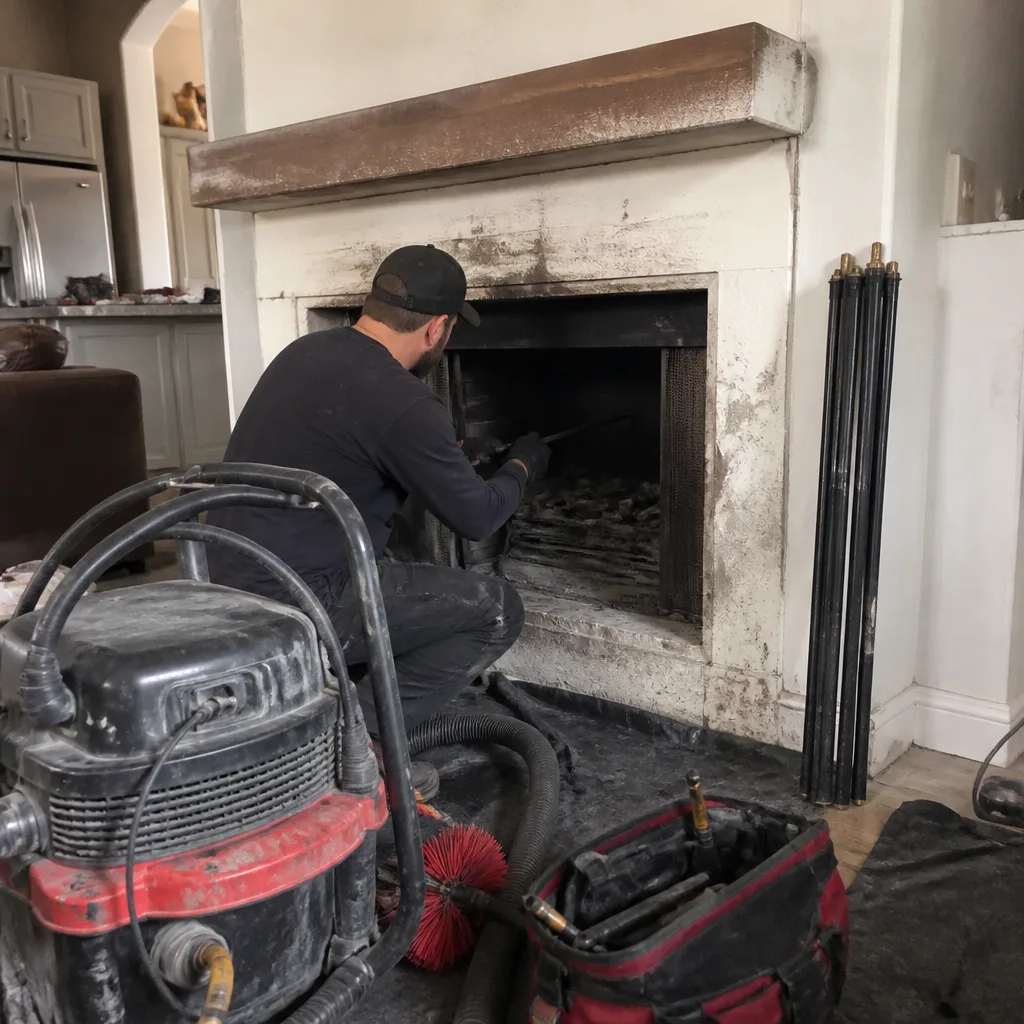 Before
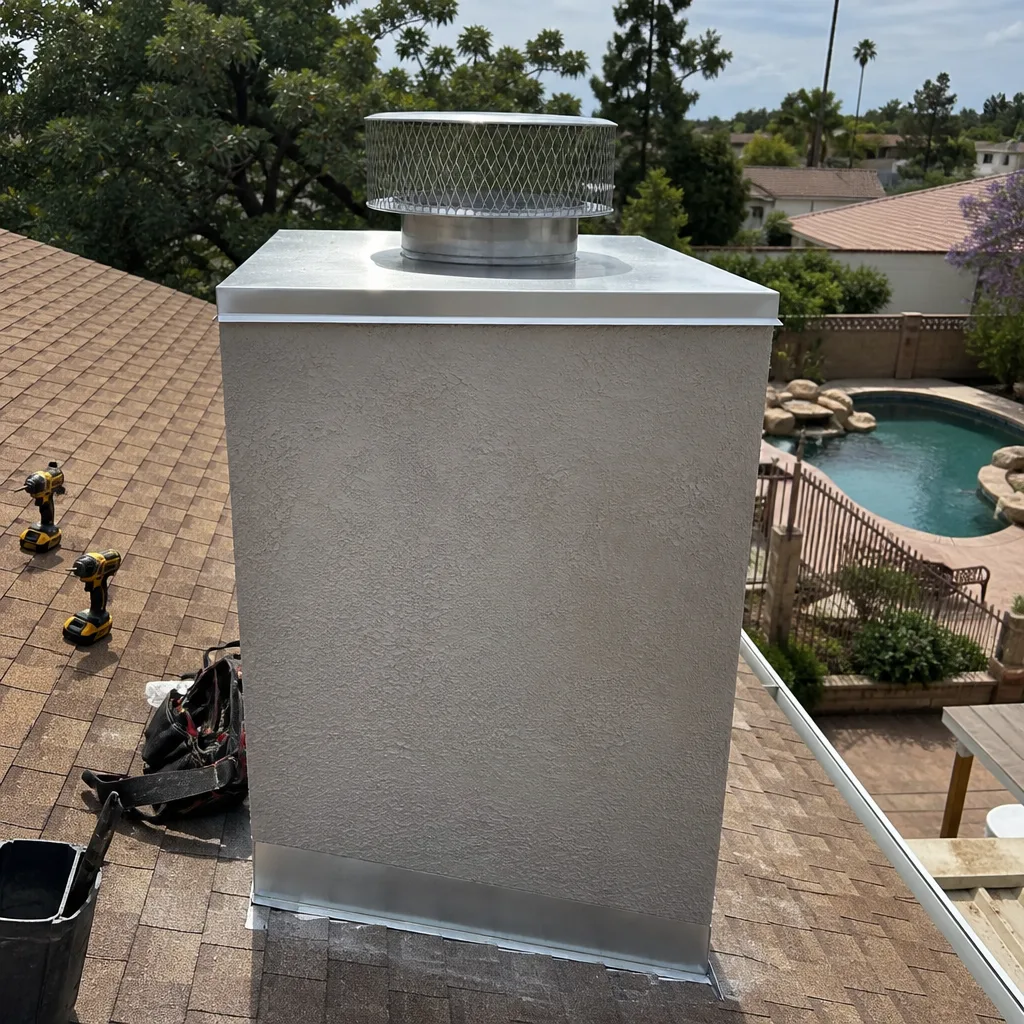 After
After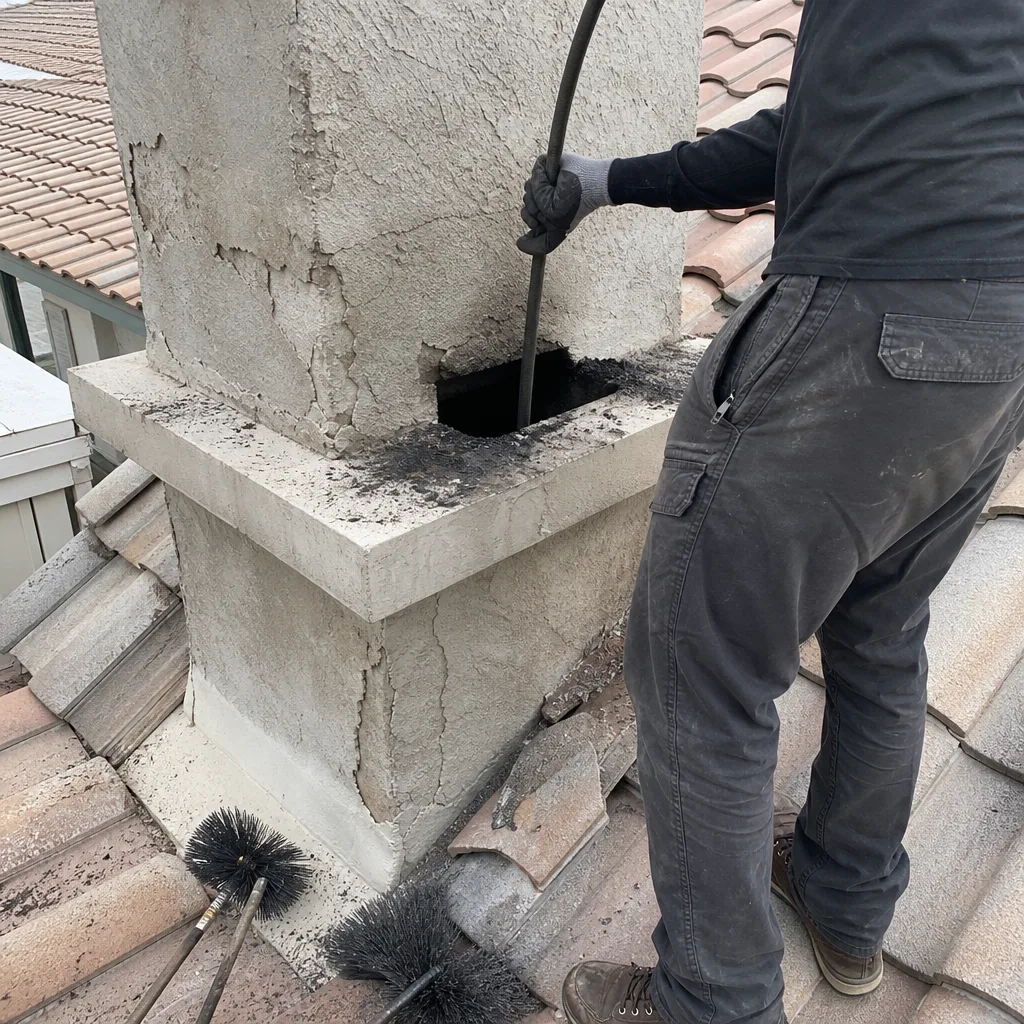 Before
 After
After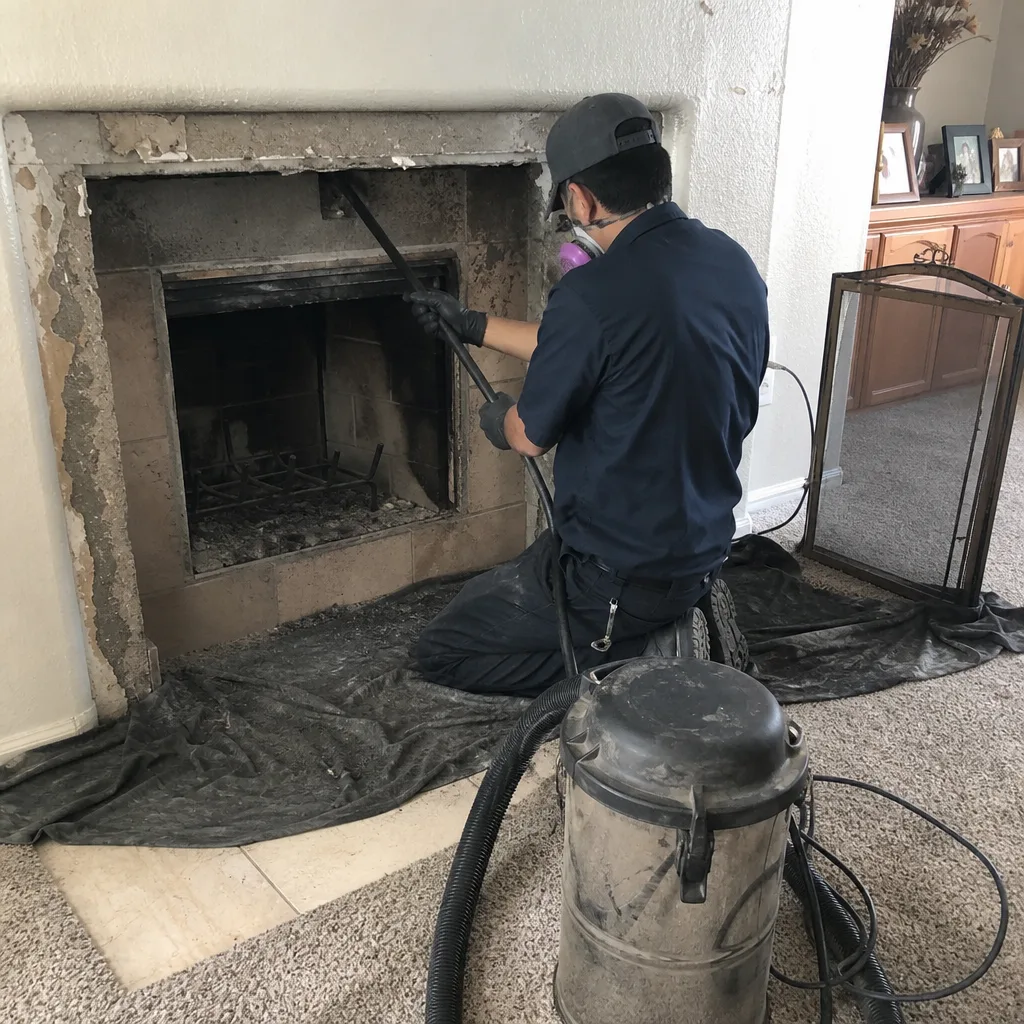 Before
 After
After